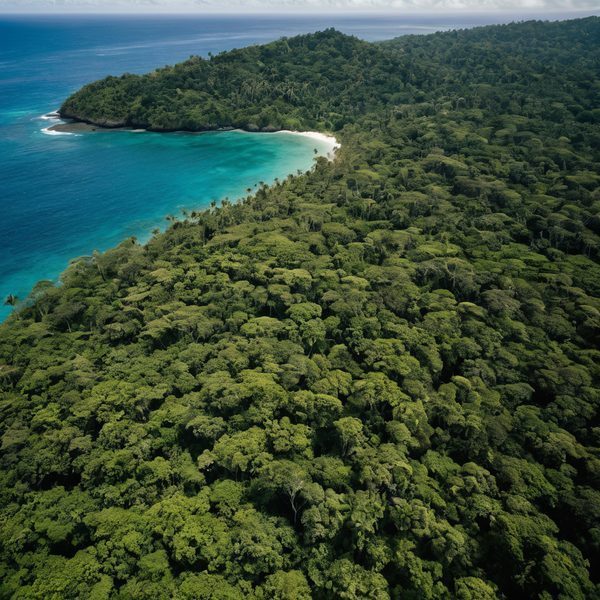
Palau’s expanding role in great‑power competition is drawing fresh scrutiny after a Guam‑based think tank warned this week that accelerated U.S. military activity on the island nation has outpaced the environmental and sovereignty safeguards meant to protect Palauans.
The Pacific Centre for Island Security’s Micronesia Security Outlook 2025, which includes a Palau chapter by Jodean Remengesau, says guardrails written into the Compact of Free Association have been “rendered ineffective” by recent build‑up. Remengesau, director of the Bureau of Agriculture in Palau’s Ministry of Agriculture, Fisheries and the Environment, writes that the U.S. military has “missed and fell short of fulfilling its duties and responsibilities under the compact,” citing failures to meet Palauan environmental standards and to consult communities before major works.
The report highlights a contested land clearing on the southern island of Angaur, where the U.S. military prepared the first site for a tactical, mobile over‑the‑horizon radar system. Remengesau says the work proceeded without an environmental earthmoving permit or required community consultations, and that debris from cleared trees was left in ways that invited invasive coconut rhinoceros beetle infestation and was later dumped on residents’ yards. In 2023, Angaur Governor Steven Salii lodged a lawsuit against Palau’s national government, the Palau Environmental Quality Protection Board, the U.S. government and military contractors, alleging violations of Palauan environmental law and compact obligations after some 271,807 square metres of land was disturbed without an environmental impact assessment or permits.
Those local grievances are unfolding against a backdrop of rising geopolitical attention. Under a renegotiated Compact that took effect on October 1, 2023, the United States pledged an US$890‑million package to Palau over 20 years, and the compact explicitly provides for U.S. defence of the islands. The report notes that because a large share of Palau’s national budget is funded by compact payments and foreign aid, officials expect continued or expanded U.S. use of Palauan territory as Washington fortifies its posture in the western Pacific in response to strategic competition with China.
A symbol of that deepening footprint is a US$118‑million radar project the report says is expected to be operational this year. What had been presented publicly as a single, jointly used shoreline radar tower later emerged, according to the report, as two separate installations — a detail that intensified community concern about the scope of U.S. operations and the transparency of planning processes.
The timing of the report coincides with what Pacific media have described as Palauan President Whipps’s historic first state visit to New Zealand, a diplomatic milestone that comes as Palau seeks to balance security arrangements with broader regional relationships. Officials in Koror and Suva have not publicly linked the trip to the report, but the visit raises Palau’s profile at a moment when domestic contestation over environmental stewardship and sovereign decision‑making is sharpening.
The Pacific Centre for Island Security’s findings add new weight to legal and political challenges already playing out in Palau’s courts and communities. If the radar and other planned facilities come online as scheduled, the think tank warns, Palau’s “peace and sovereignty as its people once knew it has been increasingly compromised by accelerated militarization” — a conclusion likely to amplify calls for stricter enforcement of environmental processes and clearer, locally accountable consultation mechanisms in any future security projects.
Leave a comment