A new Guam-based security report says rising dissatisfaction in Palau over an accelerated US military build-up is eroding environmental safeguards and sidelining local communities — a concern that has taken on new urgency as Palau’s leader made a historic first State visit to New Zealand this month.
The Pacific Centre for Island Security’s Micronesia Security Outlook 2025, which includes a Palau chapter authored by Jodean Remengesau, director of the Bureau of Agriculture in Palau’s Ministry of Agriculture, Fisheries and the Environment, concludes that the “guardrails” intended to protect Palau’s environment and sovereignty under the Compact of Free Association are being undermined by rapid militarisation. The report says Palauans have been left “out of the loop” on key decisions tied to expanded US activities in the islands.
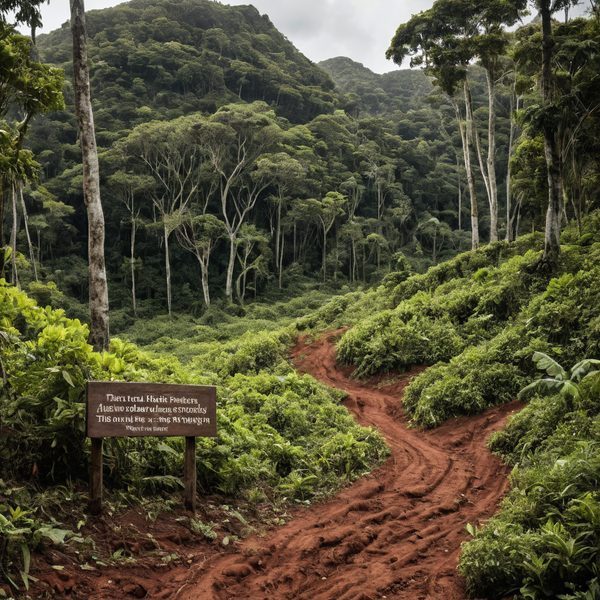
Remengesau singles out the clearing of land on Angaur for the US military’s tactical mobile over-the-horizon radar system as a flagship example of the problem. According to the report, the military moved ahead without obtaining an environmental earthmoving permit or carrying out required community consultations under Palauan law. The clearing produced “piles of shredded tree debris” that the report says created a risk of invasive coconut rhinoceros beetle infestation and were later dumped on residents’ yards in a rushed attempt to address the problem.
The Angaur clearance prompted legal action in 2023 when Governor Steven Salii filed a lawsuit against Palau’s central government, the Palau Environmental Quality Protection Board, the US government and its military contractors. The suit alleges the clearing of 271,807 square metres of land proceeded without an environmental impact assessment or the requisite permits, in breach of Palauan laws and compact obligations, the report notes.
The publication’s timing amplifies the practical stakes. Under a renegotiated Compact that took effect with a funding cycle beginning on October 1, 2023, the United States pledged an US$890 million package to Palau over 20 years and retains defence responsibilities for the island nation. The report concedes that Palau’s new geopolitical position — amid growing US-China competition — increases the likelihood of deeper Palauan involvement in US and allied security objectives, particularly now that major infrastructure projects are being delivered.
One such project is the US military radar initiative in Palau, valued at US$118 million and expected to be operational in 2026, according to the report. The think tank warns that what was initially presented as a single, mutually used shoreline radar infrastructure later evolved into separate installations, heightening concerns about transparency and the scale of the military footprint.
The developments come as President Whipps completed Palau’s first-ever State visit to New Zealand, a diplomatic milestone that underscores the archipelago’s expanding regional engagement even as domestic debates intensify over the balance between defence cooperation, environmental protection and local sovereignty. The Pacific Centre for Island Security report frames those debates as central to Palau’s near-term trajectory, arguing that the conflict between compact-driven economic dependence and the need for stronger domestic oversight is now more pronounced than ever.
Leave a comment