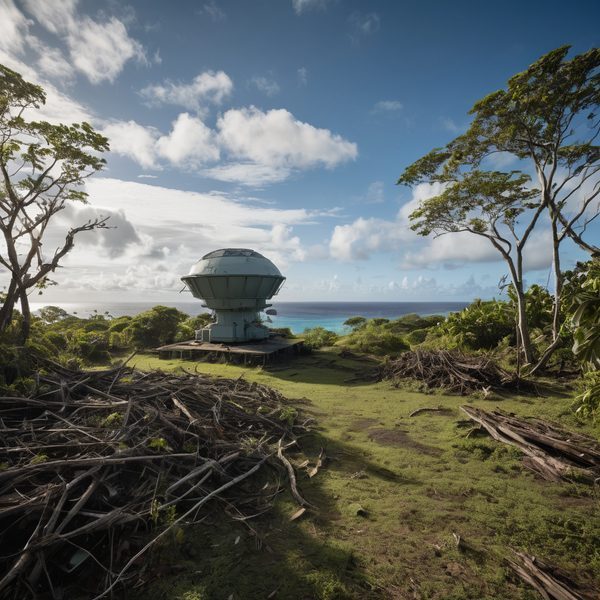
A new Guam-based security report says Palau’s rapid military build-up has sidelined legal and environmental safeguards, deepening local frustration and raising fresh questions about the nation’s sovereignty as it hosts expanded U.S. military infrastructure.
The Pacific Centre for Island Security’s Micronesia Security Outlook 2025, published this year, devotes a chapter to Palau authored by Jodean Remengesau, director of the Bureau of Agriculture in Palau’s Ministry of Agriculture, Fisheries and the Environment. Remengesau argues that although the Compact of Free Association permits U.S. use of Palauan land, waters and airspace and the installation of defence infrastructure, the compact’s environmental obligations are not being met. “The U.S military had missed and fell short of fulfilling its duties and responsibilities under the compact,” he writes in the report.
Remengesau points to a high-profile incident on Angaur, one of Palau’s 16 states, where land was cleared for the first site of a tactical mobile over-the-horizon radar system without the environmental earthmoving permits or community consultations required by Palauan law. The report says shredded tree debris left at the site created conditions inviting an invasive coconut rhinoceros beetle infestation, and that some of the debris was later dumped on residents’ yards in a hurried attempt to deal with the problem — an outcome the compact’s stipulations were intended to prevent.
The claims have already been the subject of litigation. In 2023 Angaur Governor Steven Salii sued Palau’s central government, the Palau Environmental Quality Protection Board, the U.S. government and its military contractors, alleging that 271,807 square metres of land were disturbed without the required environmental impact assessment and permits. The case remains a focal point for critics who say existing legal “guardrails” are inadequate to manage the speed and scale of militarisation.
The report acknowledges the geopolitical drivers behind the build-up, noting intensifying U.S.-China competition in the region. It also flags the economic dynamics that complicate Palau’s position: the renegotiated Compact, which began on October 1, 2023, includes an US$890 million package payable over 20 years and envisages continued U.S. defence responsibility. With a large portion of Palau’s national budget supported by compact funds and foreign aid, the report says the country is likely to see further military use of its territory.
Practical developments are proceeding rapidly. The U.S. military is overseeing a US$118 million radar project in Palau that the report says is expected to be operational this year. What had initially been presented to some Palauan officials and the public as a single shoreline radar tower for mutual use later appeared to involve two separate installations — a distinction that has fuelled concerns about transparency and local involvement in decision-making.
The Pacific Centre’s assessment is the latest in a string of warnings from local officials, environmental advocates and community leaders who argue that accelerated infrastructure projects risk eroding Palau’s autonomy and damaging sensitive island ecosystems. The report’s release heightens pressure on Palauan and U.S. authorities to clarify compliance with domestic environmental law, to explain consultation processes, and to address the legal challenge brought by Angaur’s governor as the new defence facilities come online.
Leave a comment