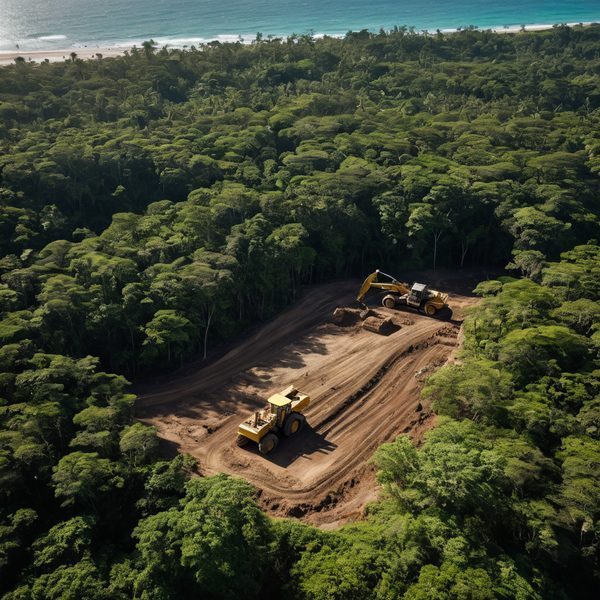
Palau’s growing role as a forward base in US strategy has provoked renewed domestic and regional scrutiny after a new report accused Washington and its contractors of sidestepping environmental rules and leaving Palauans out of key decisions — an issue underscored this week by President Surangel Whipps Jr.’s historic first State visit to New Zealand.
The Guam-based Pacific Centre for Island Security’s Micronesia Security Outlook 2025, which includes a Palau chapter authored by Jodean Remengesau of Palau’s Bureau of Agriculture, Fisheries and the Environment, says guardrails built into the Compact of Free Association have been undermined by an “accelerated militarisation” that has sidelined local consultation and environmental protections. “The U.S military had missed and fell short of fulfilling its duties and responsibilities under the compact,” Remengesau writes in the report, citing concrete instances of non-compliance with Palauan law.
Remengesau highlights the clearing of some 271,807 square metres of land on Angaur in 2023 for the siting of a tactical mobile over-the-horizon radar system, alleging that no environmental earthmoving permit was obtained, no environmental impact assessment conducted, and required community consultations were not held. The report recounts that shredded tree debris from the clearing attracted invasive coconut rhinoceros beetles and was later dumped on residents’ yards in a rushed attempt to manage the problem — a sequence the author says the compact’s environmental stipulations were meant to prevent.
Angaur Governor Steven Salii formally took legal action in 2023, suing Palau’s central government, the Palau Environmental Quality Protection Board, the US government and military contractors for breaches of Palauan environmental law and compact obligations linked to the land disturbance. The lawsuit remains a central plank of local resistance to construction practices that opponents say have been cavalier with island ecosystems and community rights.
The report’s publication comes as the US-funded radar project — budgeted at US$118 million — is expected to be operational in 2026. The Centre notes that while the renegotiated Compact of Free Association, which took effect on 1 October 2023, included an US$890-million aid package spread over 20 years and guarantees of US defence, the scale of financial dependence creates pressure for increased US use of Palauan territory and resources. The Centre warns this dynamic risks compromising the “peace and sovereignty as its people once knew it.”
The timing of the findings — released as President Whipps makes a landmark diplomatic outreach to New Zealand — gives the concerns fresh regional resonance. The report frames Palau’s predicament against broader US-China competition in the Indo-Pacific, arguing that strategic imperatives have driven rapid infrastructure deployment with insufficient transparency. It calls for stronger enforcement of environmental and consultative requirements in compact agreements and for Palauan voices to be central to decisions that alter land, sea and airspace within the island nation.
Leave a comment