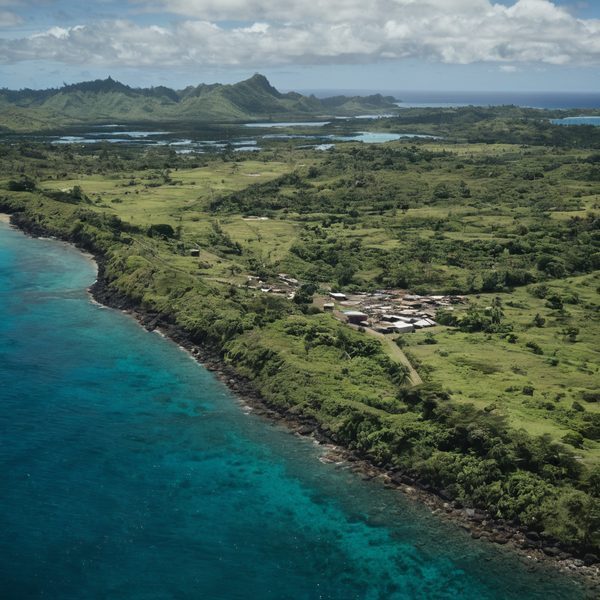
Fiji’s Permanent Representative to the United Nations, Filipo Tarakinikini, has publicly challenged the proposed $1.4 billion waste‑to‑energy incinerator at Vuda‑Saweni, warning that environmental and public health concerns must be resolved before the project proceeds and urging full transparency from the investors and the Government. In a strongly worded statement posted on social media, Tarakinikini named Australian backers Ian Malouf and Rob Cromb and called for “complete, honest, and scientifically grounded information — not marketing brochures dressed up as environmental assessments.”
“I write this not as a diplomat managing a talking point, but as a Fijian son — someone whose roots run deep into the soil of this archipelago,” Tarakinikini said, framing his intervention as both professional and personal. He said he had reviewed available data and the proponents’ track record and was “compelled to speak plainly,” insisting that questions over air and water quality, human health impacts and hazardous‑waste management must be answered “before a single shovel breaks ground.”
The project is being advanced through The Next Generation Holdings (Fiji) Pte Limited and has already become a point of national debate, Tarakinikini said. He singled out the proposal’s troubled history in Australia, pointing to a 2019 decision by the New South Wales Independent Planning Commission to cancel a comparable facility proposed for Western Sydney. The commission found the project “not in the public interest” because of uncertainties about its effects on air quality, water quality and human health, a finding Tarakinikini cited as a crucial context for any assessment in Fiji.
Tarakinikini also highlighted legal and operational questions around the proponents’ past waste operations. He referenced a magistrate’s fine against Ian Malouf’s Dial A Dump company for failing to properly cover asbestos waste, arguing that such incidents “speak directly to whether this operator can be trusted to manage hazardous materials responsibly.” He urged regulators, civil society and the international community to scrutinise both the technical evidence and the investors’ compliance record.
The envoy’s intervention is the latest development in a growing public conversation about Fiji’s waste management future, which has recently seen renewed attention on alternatives to landfilling and recycling initiatives. Tarakinikini framed his remarks as a call for rigorous, science‑based assessment rather than reliance on promotional material, saying Fijians “deserve complete, honest, and scientifically grounded information” on a project of this scale and potential risk.
Tarakinikini’s public critique places added pressure on the Government and the project proponents to respond. To date, there has been no public statement from The Next Generation Holdings (Fiji) Pte Limited, Ian Malouf, Rob Cromb, or relevant Fijian ministries in response to Tarakinikini’s comments. The envoy said that answers must come from the Government, the investors and the international community before proceedings advance, signalling that approval controversies and community concerns abroad are likely to shape the debate at home.
As scrutiny mounts, key questions remain over independent environmental impact assessments, hazardous‑waste management plans, and what oversight mechanisms will be put in place if the project moves forward. Tarakinikini’s public stance makes clear that, for now, those issues must be resolved to the satisfaction of scientific and public scrutiny before the proposed Vuda‑Saweni facility can gain wider acceptance.
Leave a comment