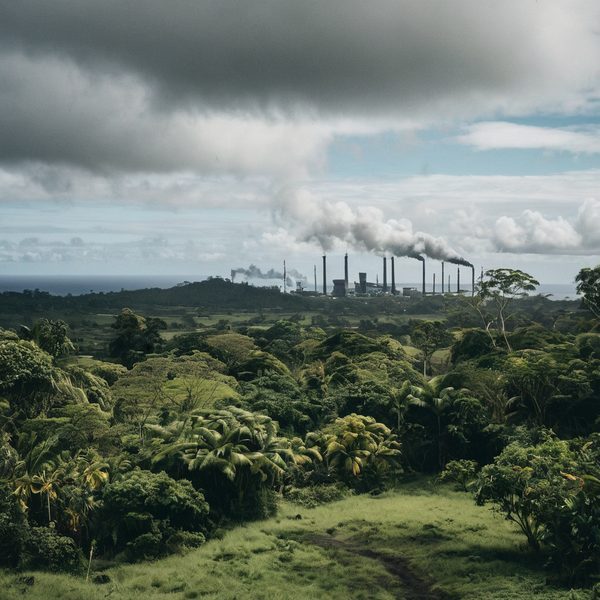
Fiji’s Permanent Representative to the United Nations, Filipo Tarakinikini, has warned the proposed waste-to-energy incinerator at Vuda could saddle the country with a “toxic legacy,” escalating international and domestic scrutiny of the contentious project. In a social media post this week, Tarakinikini challenged claims that the facility would deliver clean energy and urged Fijians to consider the long-term environmental, cultural and legal consequences.
Tarakinikini said incinerators are not a renewable solution, arguing they “emit more carbon dioxide per unit of electricity than coal-fired power plants” and amount to “a fossil fuel substitute wearing a green label.” He highlighted figures in the project proposal showing the facility would burn up to 900,000 tonnes of waste a year — roughly four times Fiji’s domestic waste generation — and produce an estimated 225,000 to 300,000 tonnes of toxic residue annually in the form of fly ash and bottom ash, which he described as “laden with persistent organic pollutants, heavy metals, and dioxins.”
Those residues, Tarakinikini warned, “do not disappear” and “must be stored, managed, and contained — permanently, on Fijian soil.” He expressed particular alarm at the proposal’s regional scale, saying the plant appears calibrated to serve an export market rather than local needs. Tarakinikini cited reports that shipments of waste would arrive from New Zealand and that as much as 150 tonnes a day could be sourced from Australia, raising the prospect that “Australia’s waste becomes Fiji’s permanent toxic legacy.”
Beyond emissions and ash volumes, the Permanent Representative flagged potential breaches of international law. He urged the Fijian government to ensure the plan complies with obligations under the Basel Convention, which governs transboundary movements of hazardous wastes, saying the state must “satisfy itself fully that this proposal does not place Fiji in violation of its international legal obligations.”
Cultural and community opposition formed a second pillar of Tarakinikini’s criticism. The Vuda Point site is widely recognised by the iTaukei as the First Landing of their people; the envoy warned that an 80-megawatt power plant and associated industrial port required by the project would have “irreversible consequences” on a site he said is central to Fijian identity — “Vuda is not just a location. It is who we are.” He noted that traditional landowners, community groups, tourism operators and national sporting bodies have voiced strong objections, and quoted a Vuda community taskforce member who called the proposal a vehicle to “use Fiji to solve a regional problem.”
Tarakinikini’s intervention marks a significant development by bringing Fiji’s UN envoy into the domestic debate and reframing the Vuda plan as an issue with international legal and climate implications. His public rebuke may increase pressure on the government to disclose fuller environmental impact assessments, details of waste sourcing contracts, and plans for ash disposal and long-term monitoring.
The project’s backers have previously promoted waste-to-energy as a way to reduce landfill use and generate electricity. But Tarakinikini’s comments underline the deep divisions over whether such incinerators are appropriate for island states with limited land and high dependence on marine and cultural resources. With opposition widespread and legal questions raised, the fate of the Vuda proposal now appears likely to hinge on both intensified local resistance and a closer examination of the plan against Fiji’s international commitments.
Leave a comment