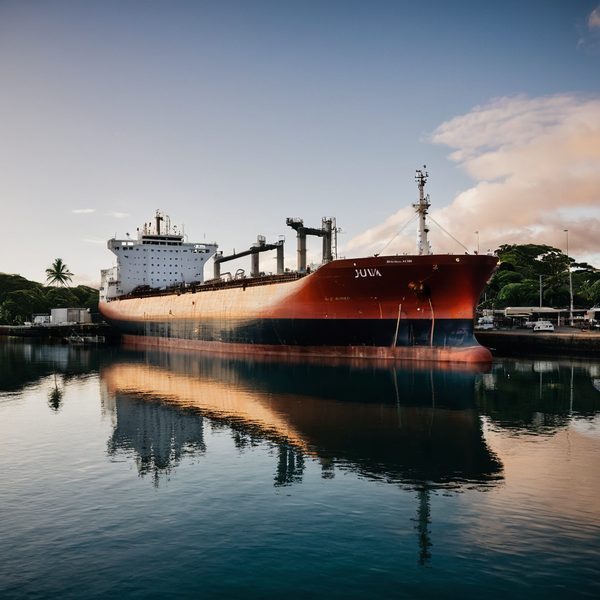
Singapore has told Fiji it does not intend to impose export restrictions on refined fuel — a move Fijian officials say provides immediate reassurance as the Pacific watches global energy markets. The assurance came during high‑level talks in Singapore between Foreign Affairs Minister Dr Vivian Balakrishnan and his Fijian counterpart, Sakiasi Ditoka, who described the discussions as “deeply reassuring” in a statement.
A key outcome of the meeting was an agreement to collaborate on long‑term fuel security for Fiji. Ditoka said Singapore’s commitment to maintaining open trade links “provides a vital sense of security for Fiji,” and signalled a shift from short‑term crisis management toward “a shared vision of strategic energy resilience.” During the briefing, Ditoka was presented with Singapore’s “three‑pillar” approach to energy stability — diversification, resilience and conservation — which Singapore framed as a blueprint for reducing vulnerability to external shocks.
Dr Balakrishnan, according to the Fijian government, reiterated Singapore’s longstanding policy of keeping international trade routes open and upholding the sanctity of commercial contracts. Singapore expressly stated that it “does not intend to impose export restrictions” on refined petroleum products, underlining its role as a major refining and bunkering hub for the region and a partner for Pacific island states dependent on sea‑borne fuel deliveries.
The ministers also reaffirmed their shared commitment to international law, including the United Nations Convention on the Law of the Sea (UNCLOS). Both said the treaty remains a central framework for ensuring freedom of navigation and transit — principles that Pacific island nations rely on to secure fuel and other essential imports. The emphasis on UNCLOS came amid growing regional concern about the security of maritime supply chains.
The assurances arrive against a backdrop of heightened anxiety over global energy supplies after recent tensions in the Middle East, which have prompted fears of disruptions in and around the Strait of Hormuz. Fiji and neighbouring Pacific countries have already felt the effects of volatile markets and supply constraints: earlier coverage from the region highlighted government monitoring of price risks and airlines adjusting services because of fuel availability. Fiji’s competition and consumer authorities have been tracking developments closely, warning that island states are price takers vulnerable to global shocks.
While the Singapore statement does not change global market dynamics or guarantee unchanged pump prices in Fiji, it removes the prospect of an official export ban from one of the region’s largest refined product suppliers. Practical next steps were not detailed in the joint statement; the meeting centred on high‑level commitments and a mutual intention to deepen cooperation on resilience measures — from supply diversification to conservation strategies — that could help insulate Fiji and other Pacific states from future disruptions.
Leave a comment