Palau’s accelerating military role in the Pacific is drawing fresh scrutiny as a Guam-based security think tank warns that environmental protections and local sovereignty are being undermined — news made more prominent this week as Palau’s leader completed a historic first State visit to New Zealand on April 13, 2026.
The Pacific Centre for Island Security’s Micronesia Security Outlook 2025, whose Palau chapter was authored by Jodean Remengesau of Palau’s Bureau of Agriculture, Fisheries and the Environment, says guardrails built into agreements with the United States are being rendered ineffective by an “accelerated military buildup” that has increasingly left Palauans out of the loop. “The U.S military had missed and fell short of fulfilling its duties and responsibilities under the compact of the U.S with Palau,” Remengesau writes in the report, flagging both legal and environmental concerns.
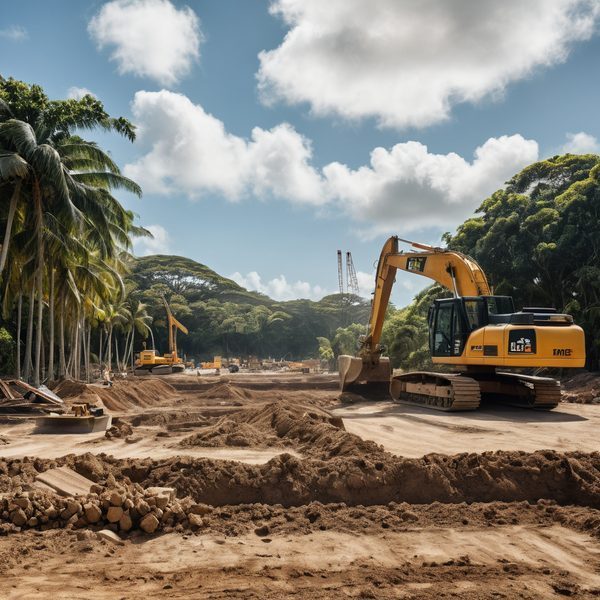
Central to the report’s criticism is construction activity on Angaur, one of Palau’s 16 states, where the U.S. military cleared more than 271,000 square metres for a tactical mobile over‑the‑horizon radar site, the report says. According to the document and past court filings, that earthworks proceeded without the environmental permits or community consultations Palauan law requires. The report details how shredded tree debris left at the site invited infestation by the invasive coconut rhinoceros beetle and was later dumped on residents’ yards in what it describes as a “rushed effort” to mitigate the problem.
Those actions prompted legal pushback in 2023, when Angaur Governor Steven Salii sued Palau’s central government, the Palau Environmental Quality Protection Board, the U.S. government and its contractors, alleging violations of domestic environmental law and compact obligations over the site clearing. The contested works are part of a broader U.S. defence footprint that has expanded under the renegotiated Compact of Free Association, which also includes an US$890‑million assistance package to Palau spread over 20 years beginning 1 October 2023.
The report notes geopolitical drivers behind the buildup, pointing to U.S.-China rivalry as the context for increased military activity in Palau. A U.S. Department of Defense radar project in Palau, budgeted at US$118 million, is expected to be operational in 2026. The Pacific Centre says a shoreline radar tower system that was initially presented as a single mutual‑use installation later materialised as two separate facilities, a development that has heightened concerns about transparency and Palau’s control over installations on its land and waters.
Palau’s official stance has been to balance security arrangements and economic support under the compact with preservation of its environment and sovereignty. But the report warns that Palau’s thin fiscal base — with a large proportion of national revenue derived from compact funds and foreign aid — may leave the country vulnerable to further uses of its territory by the U.S. military, at the cost of local consultation and environmental safeguards.
President Whipps’ State visit to New Zealand this month, the first such visit by a Palauan leader, comes at a sensitive moment. Observers say the trip gives Palauan leadership an opportunity to broaden diplomatic support and raise concerns over environmental and sovereignty impacts internationally. The Pacific Centre’s findings add momentum to ongoing legal and political debates in Palau about how to reconcile security partnerships with community rights and environmental protection as the region’s strategic importance grows.
Leave a comment