A new security report is raising fresh concerns about the pace and oversight of the United States’ military buildup in Palau, as Palau’s president completed a historic first state visit to New Zealand this month. The Guam-based Pacific Centre for Island Security’s Micronesia Security Outlook 2025 — which includes a Palau segment authored by Jodean Remengesau, director of the Bureau of Agriculture in Palau’s Ministry of Agriculture, Fisheries and the Environment — warns that measures designed to protect Palau’s environment and sovereignty have been undermined by accelerated militarisation.
The report says the Compact of Free Association gives the United States broad rights to use Palauan land, waters and airspace and to install military infrastructure, but stresses that those privileges come with obligations to meet Palauan environmental standards. Remengesau tells the think tank the U.S. military “missed and fell short of fulfilling its duties and responsibilities” under the compact, citing cases where environmental permits and community consultations were not observed.
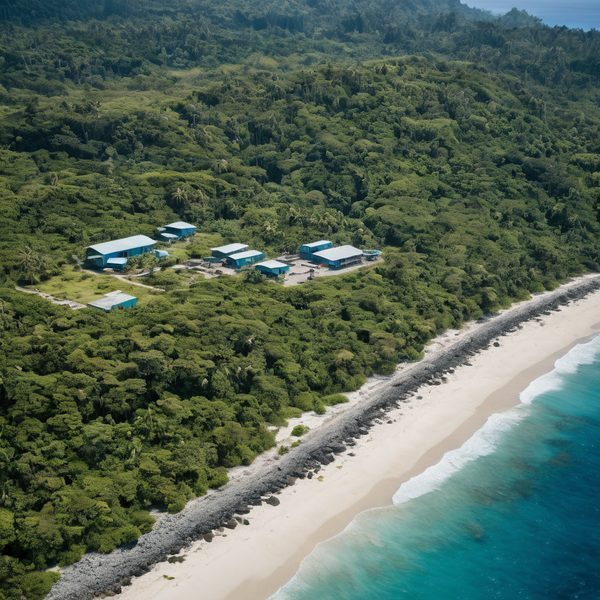
One high-profile controversy cited in the report concerns land-clearing on Angaur, one of Palau’s 16 states, where the U.S. military prepared a site for a tactical mobile over-the-horizon radar system. The report alleges that no environmental earthmoving permit was issued and residents were not properly consulted, and that the handling of cleared vegetation created additional hazards — shredded tree debris, the report says, increased the risk of infestation by the invasive coconut rhinoceros beetle and was later dumped on residents’ yards during a rushed clean-up effort. Angaur Governor Steven Salii filed legal action in 2023 against Palau’s central government, the Palau Environmental Quality Protection Board, the U.S. government and military contractors, alleging violations of Palauan environmental law after some 271,807 square metres of land were disturbed without an environmental impact assessment or permits.
The report acknowledges Palau’s changing geopolitical position and the reality that the renegotiated compact, which began its funding cycle on October 1, 2023, includes a US$890 million package over 20 years and reaffirms U.S. defence responsibilities. Because a substantial share of Palau’s national budget is derived from compact funds and foreign assistance, the think tank warns the country is likely to see increased U.S. military use of its territory — a trend the report says has “increasingly compromised” the island nation’s peace and sovereignty as previously experienced by its people.
The Pacific Centre also flags questions about transparency over specific projects. It notes the U.S. military’s US$118 million radar project — described elsewhere as a shoreline radar tower system initially presented as a single mutual-use infrastructure — is due to be operational in 2026, and that public messaging about the installations has at times differed from their subsequent implementation and use.
The report appears as Palau’s head of state undertakes new diplomatic outreach. President Surangel Whipps’ recent state visit to New Zealand — the first by a Palauan leader — marks an important diplomatic moment as Palau navigates security commitments and environmental stewardship amid greater great-power competition in the region. The think tank’s findings will likely intensify calls within Palau and among regional partners for clearer safeguards, stronger local consultation and tighter adherence to environmental protections as military projects proceed.
Leave a comment