Pacific Islands Forum Troika leaders have placed the region on a “coordinated high alert framework” to tackle a mounting fuel and energy security crisis, following a meeting in Nadi last Thursday that activated the Biketawa Declaration as the mechanism for regional response. The Troika — incoming chair Palau President Surangel Whipps, presiding chair Solomon Islands Prime Minister Jeremiah Manele, and outgoing chair Tonga Prime Minister Lord Fatafehi Fakafanua — met with Forum officials and a range of national leaders to agree urgent collective steps.
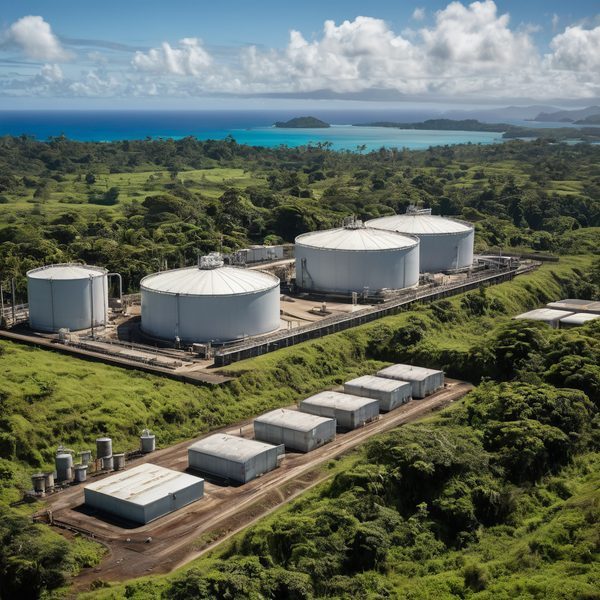
Solomon Islands Prime Minister Jeremiah Manele said he would continue consultations with Pacific leaders on the practical arrangements for the high alert framework and used the meeting to advance his country’s proposal for a Regional Petroleum and Fuel Security Initiative (RPFSI). The RPFSI is designed to strengthen supply security across the Pacific by improving tanker shipping coordination, expanding domestic storage capacity, and formalising regional supply arrangements to bolster collective negotiating power on fuel pricing and freight costs.
The Troika’s decisions come as several Forum members face acute strain: Tuvalu and the Marshall Islands have formally declared energy emergencies, while Solomon Islands, Fiji, Nauru, Vanuatu, the Cook Islands and the Federated States of Micronesia are implementing national mitigation measures to protect households, businesses and essential government services. Other Forum members have been placed on a regional watch phase, with monitoring led by the Pacific Islands Forum Secretariat.
Participation at the Nadi meeting included Fiji Prime Minister Sitiveni Rabuka and a virtual contribution from Australia’s Energy Minister Chris Bowen, underlining Canberra’s engagement in efforts to shore up supply lines and logistical coordination. The Troika also considered a regional scenario planning framework to guide preparedness for short-, medium- and long-term disruptions to fuel supplies — an acknowledgement that vulnerabilities are both immediate and structural for island economies reliant on imported petroleum.
The Biketawa Declaration, first agreed at the Forum meeting on Biketawa in Kiribati in 2000, provides an established framework for coordinated regional responses to crises. Activating Biketawa for an energy security threat is a notable escalation in regional coordination: it moves responses beyond bilateral emergency measures to a collective posture that could include pooled procurement, shared storage or shipping arrangements, and common negotiating strategies to mitigate price and freight shocks.
Manele told leaders the RPFSI “builds on existing supply arrangements by formalising a coordinated regional approach” and aims to deliver practical benefits for Pacific Island countries, including for Solomon Islands. The Troika noted national-level mitigation measures already under way and tasked the Secretariat with continued monitoring and support as consultations proceed on implementation details.
The next steps will focus on translating the Troika’s mandate into operational arrangements. That includes finalising the RPFSI design, mapping current storage and tanker capacity across the region, and agreeing how pooled negotiation or collective purchasing might work in practice. With Tuvalu and the Marshall Islands in declared emergency and others already taking action, the urgency of those technical and logistical decisions is now heightened.
Leave a comment