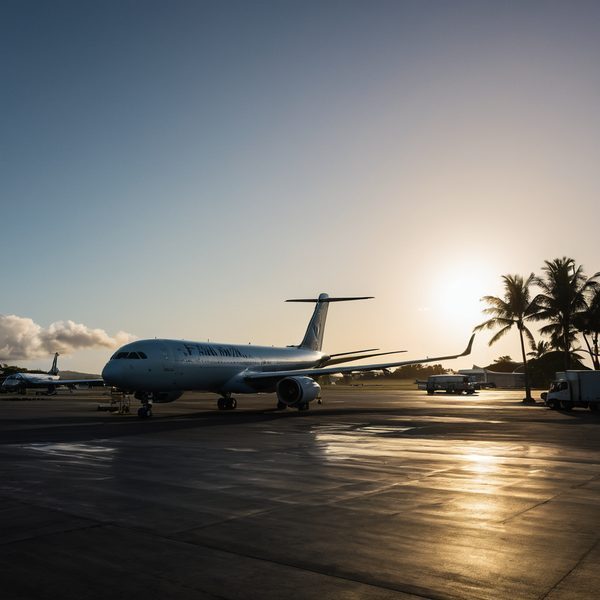
WELLINGTON/SUVA — New Zealand Prime Minister Christopher Luxon on Thursday said there is currently no immediate risk to Pacific leaders travelling to the Pacific Islands Forum in Palau in August 2026, but stressed Wellington is prepared to step in with transport and logistical support if fuel pressures in the region worsen.
“At this point we don’t see any risk of that. There is no risk to any fuel disruption for us and that’s a good thing. But August is a long way away,” Luxon told reporters, adding that no Pacific leaders had formally asked New Zealand for assistance. The Forum leaders’ meeting — the region’s most important political gathering — will be held in Palau in August, with New Zealand due to host the leaders’ meeting the following year as part of the Forum’s rotating leadership.
Palau President Surangel Whipps Jr., who visited Aotearoa last week, played down immediate concerns when interviewed by Pacific Mornings, saying he did not expect the fuel situation to prevent attendance. “I don’t think that [the fuel crisis] should affect [leaders] coming to PIF but we’re very grateful to New Zealand, Australia and the United States who are willing to go around and pick up leaders and bring them to PIF,” Whipps said. New Zealand has previously provided transport support for Forum delegations, including for meetings in Tonga in 2024 and in Honiara last September.
The reassurances come amid growing unease across the Pacific about the knock-on effects of the Middle East conflict on global energy markets and shipping. United Nations reporting this week warned that supply chain disruptions linked to the crisis are already feeding higher fuel prices and, in some cases, electricity uncertainty across island states, amplifying long-standing concerns about the fragility of regional travel links and the vulnerability of atoll economies to sudden cost shocks.
Those local impacts are already visible: the Category 4 storm Sinlaku knocked out power, water and telecommunications in Guam this week and left about 1,800 tourists stranded as services faltered. In Papua New Guinea, the PNG Defence Force chief issued orders for a one-month close camp across establishments to manage an internal crisis. Tonga this week launched a five-year multi-hazard strategy focused on risk communication and community engagement — a move officials say will strengthen resilience to compounding shocks. Separately, a new study released this month identified the Hawaiian monk seal as the marine mammal most at risk of extinction from plastic pollution, underscoring environmental stresses that compound economic and logistical pressures.
Winston Peters, New Zealand’s foreign minister, urged Pacific unity in the face of a strained global strategic environment, saying the upcoming meetings in Palau and New Zealand are “an important moment for the region.” For now, countries are expected to make the journey to Palau as planned; however, officials in capitals across the Pacific say they will be closely monitoring oil price movements, airline capacity and maritime connections in the months ahead.
The government has yet to confirm the full New Zealand delegation to Palau. With several months until the forum, Luxon’s emphasis that contingency support is available aims to reassure smaller Pacific nations whose long, complex travel itineraries — often routed through hubs such as Guam, Japan or the Philippines — would be hardest hit if fuel supply or costs deteriorate.
Leave a comment