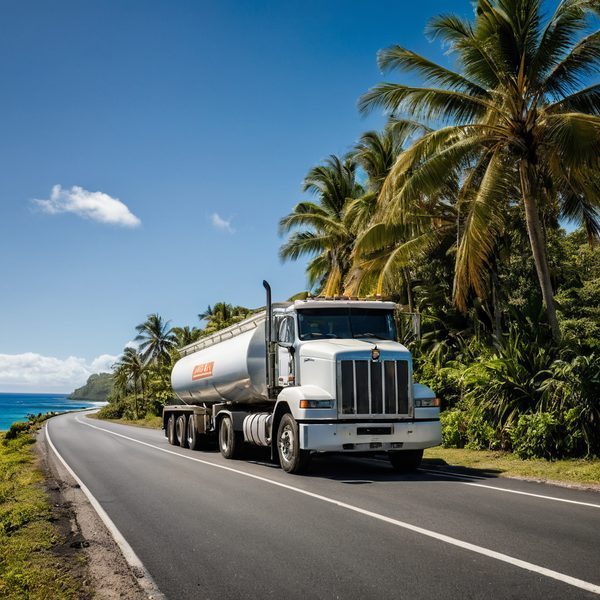
Wellington — New Zealand Prime Minister Christopher Luxon said on Thursday there is no immediate risk to Pacific leaders travelling to Palau for this year’s Pacific Islands Forum, but he warned the government is prepared to step in if mounting fuel pressures force governments to seek help.
“At this point we don’t see any risk of that. There is no risk to any fuel disruption for us and that’s a good thing. But August is a long way away,” Luxon told reporters on 16 April, noting that while no Pacific leaders have asked for assistance so far, New Zealand stands ready to help should the situation deteriorate. The comment comes against a backdrop of higher global fuel prices and supply anxieties stemming from the conflict in the Middle East that analysts say have already pushed up costs across the region.
Palau’s President Surangel Whipps Jr., who visited Aotearoa last week, echoed the cautious optimism. Whipps told Pacific Mornings he did not expect the fuel crunch to stop leaders attending the Forum and expressed gratitude for contingency offers from New Zealand, Australia and the United States. “We’re very grateful to New Zealand, Australia and the United States who are willing to go around and pick up leaders and bring them to PIF,” he said.
Foreign Minister Winston Peters framed the discussion as part of a broader strategic moment for the region. In a government press release he said the meetings in Palau and later in New Zealand are “an important moment” because Pacific countries must present a united front amid an increasingly fraught global environment. The Forum leaders’ meeting, traditionally the region’s top political gathering, is slated for August and brings together heads of government from across the Pacific to discuss shared priorities such as climate, security and economic resilience.
Travel to Palau can be complex for many island states that rely on a handful of long-haul connections via hubs such as Guam, Japan and the Philippines. New Zealand has earlier stepped in to assist Forum participation — flying leaders to the meeting in Tonga in 2024 and again to Honiara last September — underscoring how logistical fragility can quickly turn into a political problem if fuel supply tightens or prices spike.
Other Pacific developments on Thursday underlined the region’s push to shore up resilience. Tonga launched a five-year multi-hazard strategy focused on risk communication and community engagement, aimed at improving local preparedness for cyclones, storm surges and other hazards. Separately, a new study flagged the Hawaiian monk seal as the marine mammal most at risk of extinction from plastic pollution — a reminder that environmental threats remain a central concern for Pacific island states.
For now, officials say leaders are expected to travel to Palau as planned, but governments across the region will be monitoring fuel markets and supply chains closely in the months ahead and stand ready to coordinate transport or other assistance should pressures grow.
Leave a comment