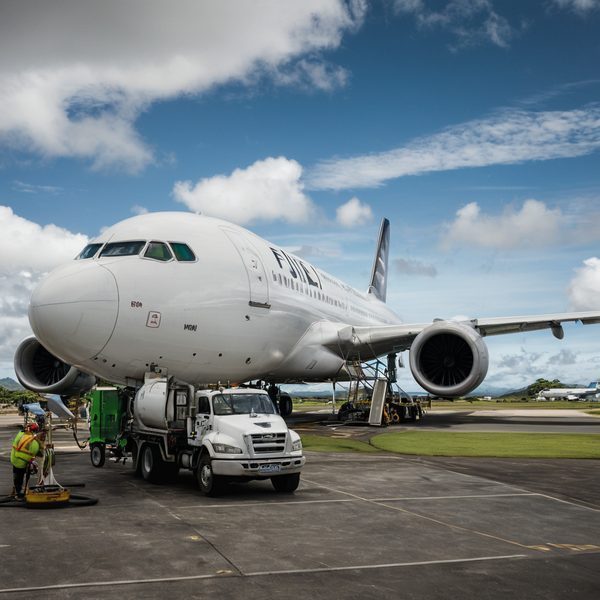
Jet fuel prices have surged to record levels since the Israeli–US campaign against Iran began on February 28, 2026, forcing Fiji Airways to prepare for a sustained period of higher operating costs even as it eyes a potential uptick in visitor demand to the islands.
New data from the International Air Transport Association’s weekly jet fuel price monitor shows the Asia & Oceania average at US$217.34 a barrel for the week ended April 10, compared with a global average of US$197.83 for the same period. Euro News reported that jet fuel prices have risen about 95 per cent since the outbreak of the conflict, a spike linked to an effective disruption of crude flows after Iran’s closure of the Strait of Hormuz and damage to Gulf oil infrastructure.
Paul Scurrah, Fiji Airways’ chief executive and the former CEO of Virgin Australia, told The Fiji Times three weeks into the conflict that his airline is treating fuel as both a supply and revenue risk and is monitoring both daily. “One thing you learn when you’re the CEO of an airline is to consistently expect the unexpected,” Scurrah said, invoking the industry mantra to “plan for the worst, hope for the best.” He warned that the immediate shock is centred on fuel prices and availability rather than a full grounding of services like the COVID‑19 pandemic produced.
Scurrah outlined a two-pronged response: protect operations and seek revenue measures that cover rising fuel costs without stifling demand. “What we are contemplating doing, which every airline who’s affected is doing, is making sure that on our revenue side, we can recover enough to cover the increasing costs that’s coming with fuel,” he said. He also cautioned against aggressive fare increases that could “kill demand,” stressing the need to balance price recovery with the risk of suppressing visitor numbers.
A worst-case scenario flagged by Scurrah is a prolonged conflict that starts to affect fuel supply lines, sustaining higher costs and forcing temporary network adjustments on marginal routes. “If it goes for much longer, a sustained increase in the cost… will start putting pressure on airlines, particularly on marginal routes,” he said, noting competitors have already made network changes. Yet Scurrah reiterated Fiji Airways’ ambition to keep its fleet flying at full capacity to support the tourism sector, which relies heavily on steady inbound air services.
The airline is also watching for opportunity amid the crisis. Scurrah said Fiji’s reputation as safe and family‑friendly, and its geographic distance from the Middle East, have led to “a big increase in interest in coming to Fiji.” That, he said, could help offset some cost pressures by supporting higher passenger volumes. The remarks come against earlier warnings from Fiji’s regulator that, as an importer of all its fuel, the nation will be a price taker and vulnerable to global oil supply shocks.
The evolving situation leaves Fiji Airways and other carriers navigating a complex mix of operational risk, commercial strategy and market demand. With jet fuel costs at historic highs and the conflict yet to show signs of quick resolution, airlines across the region face weeks—if not months—of heightened uncertainty as they weigh network resilience against passenger demand and broader economic impacts on countries dependent on tourism.
Leave a comment