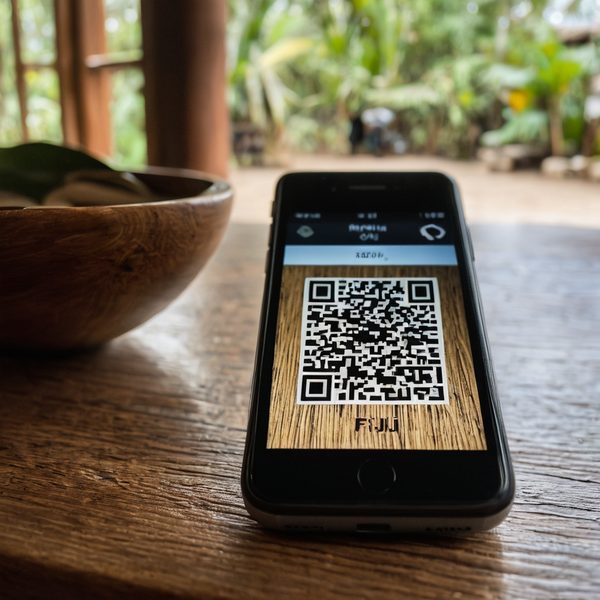
More than $7.3 billion moved through digital wallets in Fiji last year, underscoring a rapid shift toward a cashless economy driven by mobile payments and QR code adoption, the Reserve Bank of Fiji (RBF) said in a statement. The central bank’s figures show five licensed payment service providers processed 116.4 million wallet transactions as of December, an average of roughly $612 million in wallet activity each month.
QR code payments recorded particularly strong growth, reaching $672.3 million by year-end, the RBF said. The five licensed PSPs offering QR and digital wallet services in Fiji are Digital Financial Services Pte Ltd (M-PAiSA), Digicel (Fiji) Pte Ltd (MyCash), Sole Limited (Solé), Abacus Fintech Pte Ltd (WeChat), and Dynamic Payment Limited (China UnionPay and WeChat). The central bank attributed much of the increase to greater smartphone use and expanding digital payment options across urban and rural areas.
Inward remittances sent through mobile money channels also rose sharply, totalling $742.3 million last year. The RBF said the bulk of those flows came from traditional migrant source countries — Australia, the United States, New Zealand, the United Kingdom and Canada. That figure helps explain another notable shift: inward remittances via mobile networks now account for almost half of the roughly $1.3 billion in annual remittance inflows, giving mobile wallets an increasingly central role in Fiji’s foreign exchange and household income landscape.
User uptake has followed the transaction surge. The RBF reported 957,816 registered e-money users at the end of December, of whom 722,340 — or 75.4 percent — were active. Those active-user rates point to sustained daily and peer-to-peer use beyond one-off downloads, the bank said, with person-to-person transfers having “skyrocketed” since 2020 according to Governor Ariff Ali.
Ali said the central bank is pressing ahead with practical measures to support interoperability and reliability as usage grows. The RBF is working on a single, standardised QR code that will operate across all payment apps, a move intended to spare merchants from displaying multiple codes and to reduce transaction failures caused by incompatible systems. “A standardised QR code will support businesses, make customers’ lives easier and help strengthen Fiji’s growing digital economy,” Ali said.
The RBF’s numbers also include a forward-looking projection: at a Pacific Fast Payments Systems workshop in December, Ali estimated mobile wallets could see about 50 million transactions totalling $3 billion by 2025, with continued rises in QR, bank-to-wallet and wallet-to-bank activity. Those projections highlight how digital wallets are not only displacing cash for everyday payments but are becoming a major conduit for remittances and broader financial flows.
The rapid expansion has attracted regulatory and law-enforcement attention. Recent prosecutions for mobile-money fraud — including arrests connected to MPaisa scams — have underscored the need for stronger consumer protections, anti-fraud measures and public education as digital channels scale up. The RBF’s move toward a single QR standard and its ongoing oversight of licensed PSPs form part of broader efforts to balance innovation with safety as Fiji’s financial ecosystem continues its pivot to cashless transactions.
Leave a comment