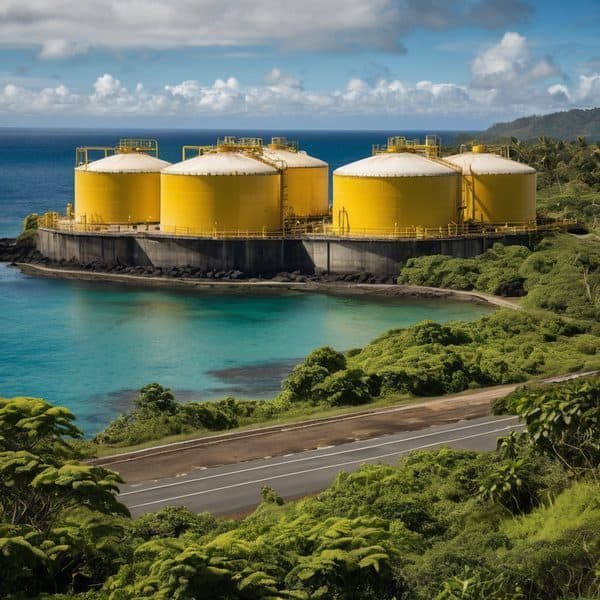
Prime Minister Sitiveni Rabuka has moved to reassure Fijians that the country’s fuel supply is stable, providing fresh stock figures and delivery commitments as the nation navigates high global fuel prices. In a statement on April 19, Rabuka said Fiji had about 45 million litres of fuel in stock, with a further 22 million litres due to arrive before the end of April, bringing the month’s available supply to roughly 67 million litres.
Rabuka stressed the numbers are part of the routine supply cycle and do not indicate an impending shortage. “This brings the total available supply for April to about 67 million litres, which is close to half of our total national storage capacity,” he said. He noted daily consumption remains steady at around 2.5 million litres, and that stocks are expected to draw down to approximately 40 million litres — about 29 percent of storage capacity — by the end of April as shipments are received and discharged.
The prime minister explained that the reduction in storage near the end of a cycle is normal and necessary to allow safe receipt and handling of incoming shipments. “Storage levels must come down at the end of each cycle to allow the next shipment to be received and discharged safely,” Rabuka said, aiming to allay public concern about the planned drawdown.
Looking ahead, Rabuka said fuel suppliers have committed to delivering about 118 million litres in May. Those incoming supplies are expected to boost national reserves to more than 59 percent of storage capacity, he added, reinforcing government confidence that Fiji will remain in a stable supply position through the coming month.
Rabuka classified the current situation as Phase One — a normal supply environment — while acknowledging the country is operating under pressure from elevated global fuel prices. He did not provide details of the suppliers or the exact arrival dates for the April and May shipments, but emphasised that commitments from suppliers underpin the government’s assessment of stability.
The prime minister’s update comes amid wider public sensitivity to global fuel market volatility. By specifying current stock levels, expected arrivals and consumption rates, the government has framed the latest development as reassurance that normal supply operations continue despite higher international costs. The May delivery commitments, if met, would significantly increase reserves and provide buffer against short-term market fluctuations.
Leave a comment