Prime Minister Sitiveni Rabuka announced on April 21 that the Fijian government will redeploy FJ$56 million (US$39.95 million) from the existing 2025–2026 budget to blunt the impact of sharply rising global fuel prices, while stressing that the nation’s fuel supply remains secure. Rabuka said the package is not new borrowing but a reprioritisation of funds from delayed projects to provide immediate support for households, businesses and essential services facing higher costs.
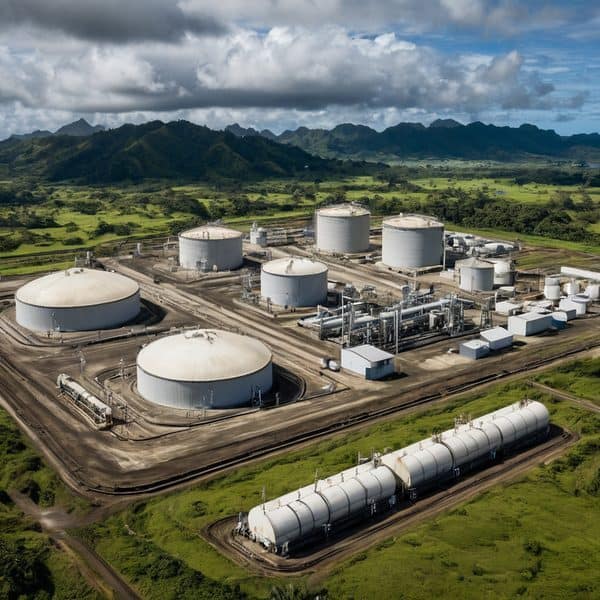
Rabuka set out the country’s supply position on April 19, saying Fiji had about 45 million litres of fuel on land and was expecting a further 22 million litres before the end of April — bringing the month’s available supply to roughly 67 million litres. He warned stocks would draw down to about 40 million litres, or roughly 29 percent of national storage capacity, by the end of April under normal consumption patterns of around 2.5 million litres per day, but described this as part of the routine supply cycle necessary to receive and discharge the next shipments safely.
The prime minister said the immediate stretch in stocks will ease in May, with fuel suppliers committing to deliver about 118 million litres next month. Once those shipments arrive, Rabuka said national fuel stocks are expected to rebound to over 59 percent of storage capacity, keeping Fiji in “Phase 1” — a normal supply situation albeit one under price pressure from global markets.
Government officials and Rabuka attributed the spike in domestic pump prices to international developments rather than local shortages. He pointed to the conflict in the Middle East and related shipping disruptions — including the closure of the Strait of Hormuz — as key drivers pushing up global crude and refined product costs. Because Fiji imports fuel priced in US dollars, Rabuka said international price rises are passed through to the domestic market. The independent price regulator, the Fijian Competition and Consumer Commission (FCCC), implemented a fuel price increase on April 1 and Rabuka said another rise is anticipated in May.
The FJ$56 million response, approved by Cabinet on April 21, is intended to shield vulnerable households and keep critical services functioning as higher transport and operational costs feed through the economy. Rabuka framed the intervention as targeted relief to “protect livelihoods, maintain essential services, and support the most” affected groups, noting the government’s preference for reprioritisation over borrowing to meet immediate needs.
This update follows warnings in March from government and regulators about the risk to Pacific fuel supplies amid escalating tensions that threatened the Strait of Hormuz and global shipping. At that time officials urged calm, pointing out Fiji’s reliance on imported fuel but saying stock levels remained adequate. The latest figures and the new fiscal response clarify how the government plans to manage short-term supply cycles while cushioning citizens from international price shocks as shipments scheduled for May are expected to restore buffer stocks.
Leave a comment