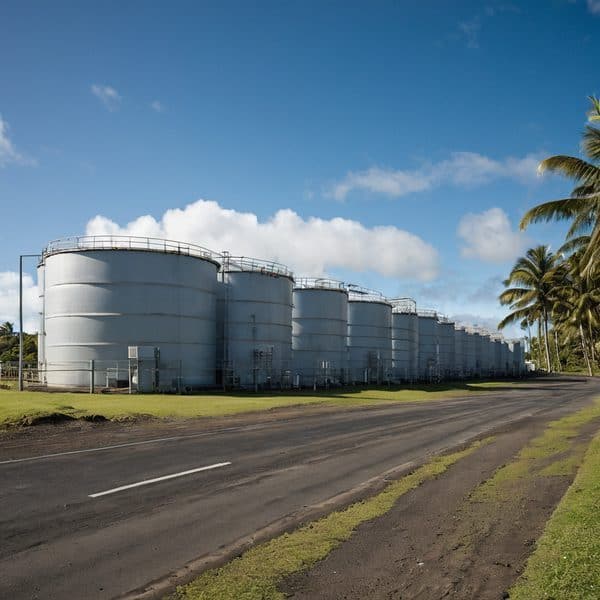
Fiji has adequate fuel stocks for now but faces rising prices driven by global market shocks, Prime Minister Sitiveni Rabuka said, as Cabinet approved a A$56 million (US$39.95 million) redeployment from the 2025–2026 budget to help households, businesses and essential services cope with higher costs.
Speaking in Suva, Rabuka said that as of April 19 the country held about 45 million litres of fuel onshore and was expecting a further 22 million litres before month’s end, bringing total available supply for April to around 67 million litres — roughly half of national storage capacity. Daily consumption remains steady at about 2.5 million litres, he said, and normal usage would see stocks drawn down to roughly 40 million litres (about 29 percent of capacity) by April 30. Rabuka stressed that this decline is routine to allow for safe receipt and discharge of incoming shipments.
Looking ahead, the prime minister said fuel suppliers have committed about 118 million litres for May. Those deliveries are expected to lift national stocks to more than 59 percent of storage capacity, reinforcing Rabuka’s assessment that Fiji is in a Phase 1 — a normal supply situation, albeit one under pressure from elevated international prices.
Rabuka attributed the domestic price pain to global factors rather than local shortages. “This is not a fuel shortage crisis. This is a global price crisis,” he said, citing the closure of the Strait of Hormuz and rising costs in international markets. He reminded the public that fuel is traded in US dollars and that increased global prices are passed through to domestic consumers. Rabuka noted the independent price regulator, the Fijian Competition and Consumer Commission (FCCC), set higher retail fuel rates on April 1 and indicated another price rise is likely in May.
To blunt the economic impact, Cabinet on April 21 approved the redeployment of FJ$56 million from within the existing 2025–2026 Budget — funds shifted from delayed projects rather than new borrowing, the government emphasised. Rabuka said the measure aims to “protect livelihoods, maintain essential services, and support the most” affected households and enterprises as the government develops targeted assistance measures.
The government’s update is the latest development in a story that has been monitored since tensions in the Middle East escalated earlier this year. March coverage recorded official assurances that Fiji was monitoring potential disruptions after reports of shipping suspensions and the threat to flows through the Strait of Hormuz, a key artery for global oil shipments. Those warnings foreshadowed the current surge in import costs that regulators and officials now say is filtering into local pump prices.
Officials have framed the current response as precautionary and temporary, stressing supply commitments for May and routine inventory management. However, with another regulator-set price review expected next month and wholesale markets remaining volatile, businesses and consumers are likely to feel ongoing pressure until global conditions stabilise.
Leave a comment