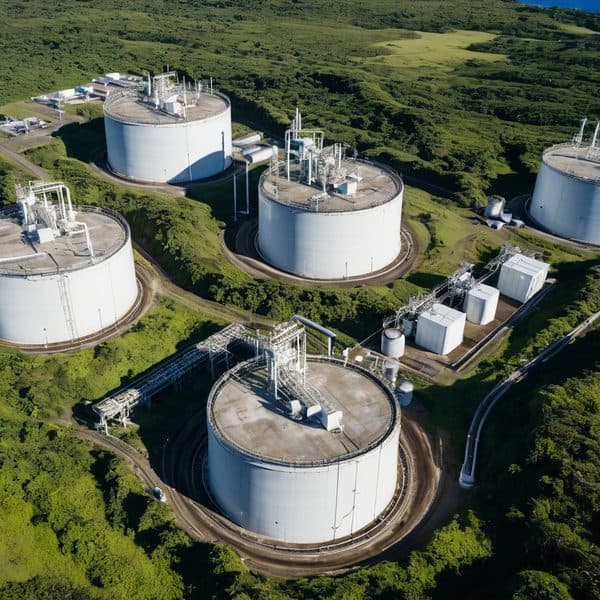
Suva — Fiji has sufficient fuel stocks for the month ahead, but Prime Minister Sitiveni Rabuka warned on Friday that households and businesses should expect further price pain as global market pressures continue to bite. Rabuka gave a detailed update on national fuel reserves and unveiled a $56 million reprioritisation within the 2025–26 budget to help cushion the impact of rising international prices.
As of April 19, Fiji had about 45 million litres of fuel in storage on land, with a further 22 million litres scheduled to arrive before the end of April, bringing total available supply for the month to roughly 67 million litres — close to half of the country’s storage capacity, Rabuka said. He noted daily national consumption is currently around 2.5 million litres and forecast that normal usage would draw stocks down to about 40 million litres by the end of April, equivalent to roughly 29 percent of storage capacity.
Rabuka stressed that the drawdown is part of routine supply cycles to allow safe discharge of incoming shipments, and described the country’s supply position as “Phase 1 — a normal supply situation, but under pressure from high global fuel prices.” He said fuel suppliers have committed to delivering about 118 million litres in May, which would lift national fuel stocks back to over 59 percent of storage capacity once those shipments arrive.
The prime minister attributed the sharp rise in domestic prices to international developments, pointing to the war in the Middle East, disruptions to shipping routes such as temporary closures of the Strait of Hormuz, and a stronger US dollar. He underlined that the April 1 increase in retail fuel prices was implemented by the independent price regulator, the Fijian Competition and Consumer Commission (FCCC), “to reflect real purchasing costs,” and warned that another price rise is likely in May.
Responding to the squeeze on households, transport operators and essential services, Cabinet on April 21 approved the redeployment of $56 million (US$39.95 million) from within the existing budget to provide immediate relief. Rabuka said this is not new borrowing but a reprioritisation of funds from delayed projects to “protect livelihoods, maintain essential services, and support the most” — he paused mid-sentence in his statement but emphasised the package targets those most affected.
The government’s update follows earlier warnings in March from officials and observers that tensions in the Middle East and the potential disruption of crude shipments through the Strait of Hormuz could push global oil prices higher, a dynamic that disproportionately affects Pacific island nations that import all their fuel. For now, Rabuka insisted Fiji is not facing a shortage, but that the country remains exposed to volatile international markets that are determining domestic prices.
Leave a comment