Prime Minister Sitiveni Rabuka has announced a $56 million (US$39.95 million) government reprioritisation to blunt the impact of rising global fuel prices, while stressing that Fiji faces a price shock rather than a supply shortage. The Cabinet approved the redeployment of funds from delayed projects on April 21, 2026, Rabuka said, as he outlined the country’s current fuel stocks and projections through May.
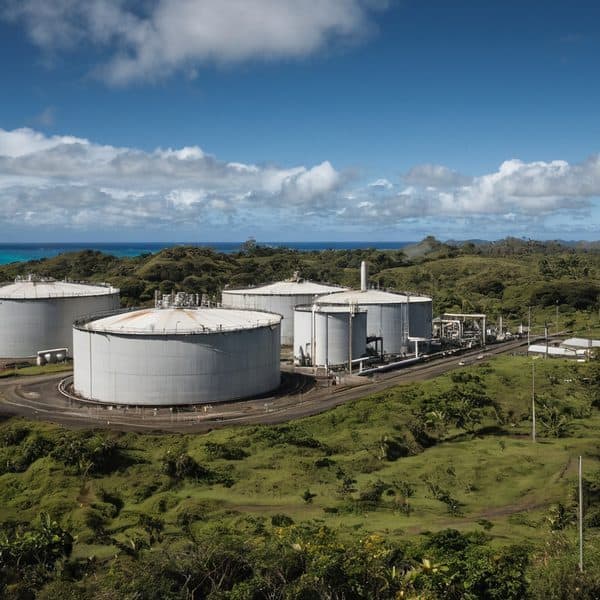
Rabuka gave a detailed snapshot of stocks as of April 19: about 45 million litres of fuel on land, with a further 22 million litres expected to arrive before the end of April. That brings total available supply for April to roughly 67 million litres — close to half of Fiji’s national storage capacity. With average daily consumption at about 2.5 million litres, he said stocks are expected to draw down to approximately 40 million litres, or about 29 percent of capacity, by the end of April. Rabuka described that drawdown as routine: “Storage levels must come down at the end of each cycle to allow the next shipment to be received and discharged safely.”
Looking ahead, Rabuka said fuel suppliers have committed to delivering about 118 million litres in May, which would lift national stocks to over 59 percent of storage capacity and restore buffers. Despite the supply commitments, he warned consumers to brace for further price pressure: an additional fuel price increase is anticipated in May. Rabuka attributed the spike in costs to global market forces — the war in the Middle East, disruptions to traffic through the Strait of Hormuz and stronger international commodity prices — not to failures in Fiji’s supply chain.
Rabuka also reiterated that the April 1 price rise was implemented by the Fijian Competition and Consumer Commission, the independent price regulator, to reflect actual purchasing costs denominated in US dollars. “This is not a fuel shortage crisis. This is a global price crisis,” he said, emphasising that when global prices increase those costs are passed through to domestic markets. The government’s $56 million package, he added, is intended to “protect livelihoods, maintain essential services, and support the most [vulnerable]” though his statement did not provide a detailed breakdown of how the funds will be allocated.
The move builds on earlier assurances from government ministers in March that Fiji’s reserves were sufficient even as officials warned of heightened risk from geopolitical tensions affecting global oil flows. Fiji, which imports all of its fuel, remains exposed to international pricing and exchange-rate shifts — factors that have driven repeated reviews by the regulator and prompted public concern about transport and business costs.
By framing the response as a budget reprioritisation rather than new borrowing, Rabuka sought to reassure households and operators that the government is acting to soften the blow. With May shipments expected to materially bolster stocks, the immediate risk is higher prices at the pump rather than physical shortages — a distinction that matters for planning by transport operators, shipping lines and government services that rely on consistent fuel deliveries.
Leave a comment