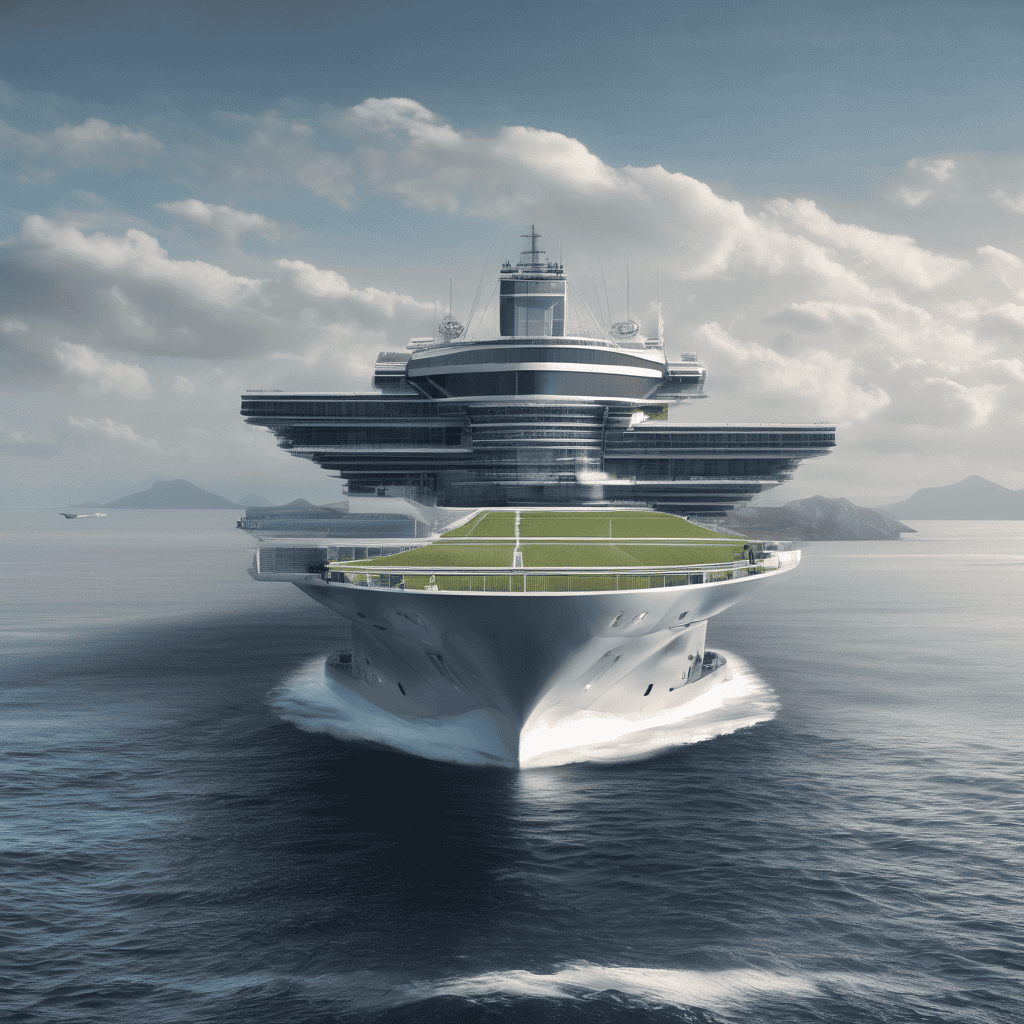
Four years after launching what is believed to be the world’s first autonomous electric container feeder ship, Chinese officials are celebrating a significant milestone: the successful completion of an autonomous docking procedure for the vessel, named Zhi Fei. This achievement, reported to enhance operational efficiency, marks a noteworthy advancement in shipping technology.
The Zhi Fei, which measures approximately 110 meters in length and has a capacity of 300 TEU (twenty-foot equivalent units), began its commercial operations in April 2022. It is engineered to function in three distinct modes: crew-managed navigation, remote-controlled navigation from a shore station, and completely unmanned autonomous navigation.
The autonomous berthing event occurred at the Qingdao Port Terminal in Shandong Province on February 21. During the procedure, the ship utilized its autonomous navigation ability to position itself alongside the berth, while a vacuum-type automated mooring system, which employs suction cups to secure the hull, facilitated the docking process. Impressively, the operation was completed in just 30 seconds, significantly reducing the time traditionally needed for berthing.
Furthermore, the port facility is equipped for autonomous loading and unloading, operated by an automated crane and trucks, reinforcing the efficiency of the entire operation. The Zhi Fei, managed by Navigation Brilliance (BRINAV), primarily travels between Qingdao Port and Dongjiakou, with a longest single journey of 89 nautical miles and a cruising speed of up to 12 knots. Last year, the ship completed 353 voyages, transporting more than 80,800 TEU and covering over 48,000 nautical miles since its service began.
According to BRINAV, the Zhi Fei has made over one million independent decisions, showcasing the advancements in its autonomous systems. Jiang Haiying, chairman of Navigation Brilliance, emphasized that intelligent shipping goes beyond merely replacing human capabilities; it is about enhancing safety and efficiency in the shipping industry, positioning China as a strong maritime power through these innovations. The ship operates with 30 percent fewer crew members compared to traditional vessels and has reduced the risk of human error by a remarkable 80 percent, resulting in savings of approximately $27,500 each month in operating costs.
This pioneering project signifies a promising future for the shipping industry in China and globally, as advancements in autonomous technologies continue to reshape maritime operations.
Leave a comment