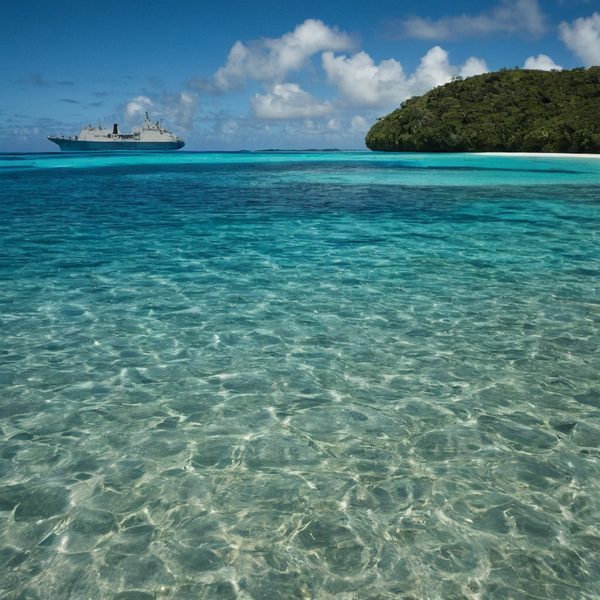
A new Guam-based report has renewed scrutiny of the expanding U.S. military presence in Palau, saying safeguards meant to protect the island nation’s environment and sovereignty have been undermined by rapid build-up and a lack of local consultation. The findings come as Palauan leader Surangel Whipps Jr. this week made the first-ever State visit by a Palauan head of state to New Zealand, underscoring Palau’s rising diplomatic profile even as domestic tensions over militarisation grow.
The Pacific Centre for Island Security’s Micronesia Security Outlook 2025, authoring the Palau section was Jodean Remengesau of Palau’s Bureau of Agriculture, Fisheries and the Environment. Remengesau argues that while the Compact of Free Association gives the United States exclusive use of Palauan land, waters and airspace and authorises military infrastructure, those rights come with environmental and procedural obligations that, he says, have not been consistently met. “The U.S military had missed and fell short of fulfilling its duties and responsibilities under the compact of the U.S with Palau,” Remengesau writes in the report.
A focal point of the complaints is Angaur, where the report alleges the U.S. military cleared land for a tactical mobile over-the-horizon radar site without obtaining the required Palauan earthmoving permits or carrying out community consultations. The report details scenes of shredded tree debris left near homes and warns such clearing increased the risk of invasive coconut rhinoceros beetle infestation — an outcome the compact’s environmental stipulations were intended to prevent. In 2023 Angaur Governor Steven Salii sued Palau’s central government, the Palau Environmental Quality Protection Board, the U.S. government and military contractors, alleging the clearing of 271,807 square metres of land without an environmental impact assessment or permits.
The report also highlights the strategic pressures that have driven U.S. activity in Palau. Under a renegotiated Compact of Free Association, the United States pledged US$890 million to Palau over 20 years, a package that began its cycle on October 1, 2023, and includes a formal U.S. defence guarantee. With much of Palau’s national budget supported by compact funds and overseas aid, the think tank warns the island is likely to see continued and possibly expanded military use.
Tensions between Washington and Beijing are cited as a key driver of the build-up. The U.S. military’s US$118 million radar project in Palau is expected to be operational this year, the report notes. It also says a shoreline radar tower project that was initially presented as a single infrastructure for mutual use has in practice taken on the character of multiple, distinct installations — a development critics say reduces transparency about the scale and footprint of military facilities.
The timing of the report — paired with President Whipps’s historic State visit to New Zealand — amplifies the political stakes. Palauan authorities are navigating increased international attention and strategic value even as local leaders and communities raise legal and environmental objections. The Pacific Centre for Island Security concludes that accelerated militarisation has eroded, in practical terms, some of the guardrails intended to protect Palau’s environmental integrity and self-determination, and that these tensions are likely to intensify as U.S. infrastructure comes online and geopolitical competition in the region continues.
Leave a comment