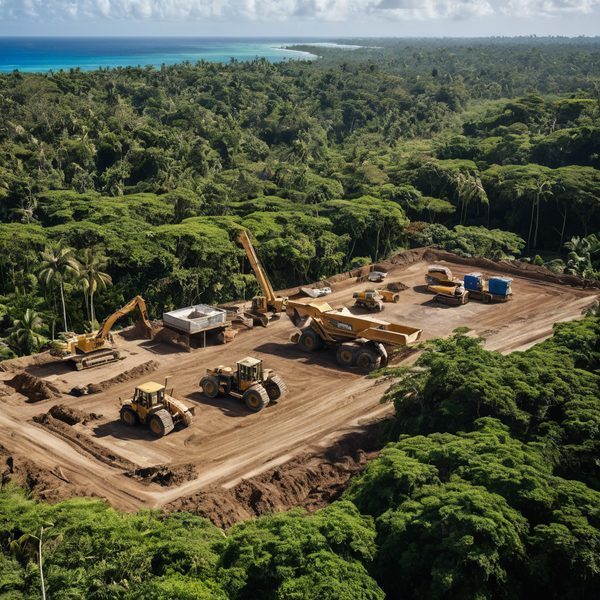
A new report from the Guam-based Pacific Centre for Island Security says guardrails meant to protect Palau’s environment and sovereignty are being undercut by an accelerated U.S. military buildup — and that Palauans have been largely left out of decisions affecting their land. The Micronesia Security Outlook 2025 segment on Palau was authored by Jodean Remengesau, director of the Bureau of Agriculture at Palau’s Ministry of Agriculture, Fisheries and the Environment, and details specific environmental and legal concerns linked to recent defence projects.
Remengesau writes that while the Compact of Free Association gives the U.S. military exclusive use of Palauan land, waters and airspace and allows military infrastructure, the treaty also requires U.S. forces to meet Palau’s environmental standards. “The U.S military had missed and fell short of fulfilling its duties and responsibilities under the compact of the U.S with Palau,” he writes, arguing that those protections have been rendered ineffective as activity accelerates.
The report highlights the clearing of 271,807 square metres of land on the state of Angaur for a site intended for a tactical mobile over‑the‑horizon radar system. According to the report, the work proceeded without the environmental earthmoving permits or community consultations required by Palauan law. It adds that shredded tree debris left at the site invited infestations of invasive coconut rhinoceros beetles and was subsequently dumped in residents’ yards in what the report describes as a rushed attempt to address the problem.
The Angaur controversy prompted legal action in 2023. Governor Steven Salii sued Palau’s central government, the Palau Environmental Quality Protection Board, the U.S. government and its military contractors, alleging violations of Palauan environmental laws and compact obligations for disturbing the property without conducting an environmental impact assessment or obtaining permits.
The report places these local disputes in a broader geopolitical and economic context. Under the renegotiated Compact of Free Association, the United States pledged an US$890 million assistance package to Palau over 20 years, a cycle that began on October 1, 2023. The compact also reaffirms U.S. responsibility for Palau’s defence. Because a significant portion of Palau’s national budget comes from compact funds and foreign aid, the authors note the government may find itself constrained in relations with Washington as military use of Palau increases.
On the military timeline, the report says the U.S. radar project in Palau carries a budget of roughly US$118 million and is expected to be operational in 2026. It notes that what was initially presented as a single shoreline radar system for mutual use ultimately became two separate installations — a shift the report flags as emblematic of transparency and consent issues that have fuelled local dissatisfaction.
The Pacific Centre for Island Security concludes that Palau’s peace and sovereignty “as its people once knew it” have been increasingly compromised by rapid militarisation, even as the island nation’s strategic position draws it deeper into U.S. and international security objectives. With the radar project approaching operation and legal challenges still pending, the report frames an urgent need for clearer environmental compliance, community consultation and oversight before further irreversible changes are made to Palau’s landscape and governance.
Leave a comment