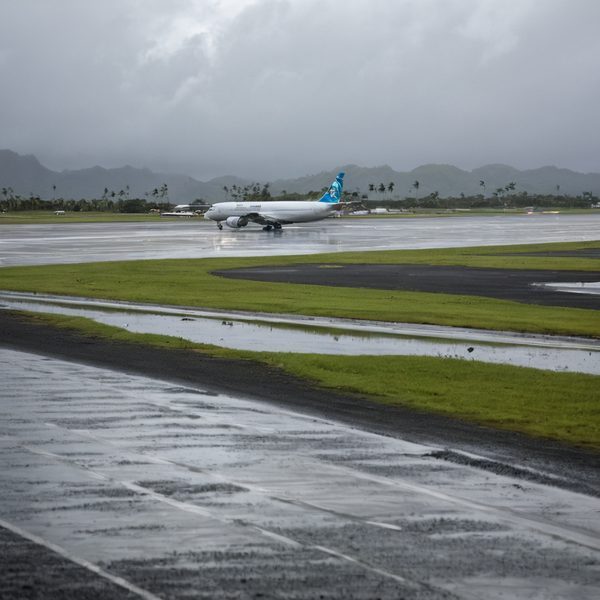
WELLINGTON/SUVA, 16 April 2026 — New Zealand’s prime minister says there is no immediate threat to Pacific leaders’ plans to travel to Palau for this year’s Pacific Islands Forum, but Canberra and Wellington remain ready to step in if mounting fuel pressures across global supply chains worsen.
“At this point we don’t see any risk of that. There is no risk to any fuel disruption for us and that’s a good thing. But August is a long way away,” Prime Minister Christopher Luxon told reporters on Thursday, adding that no Pacific government had yet asked New Zealand for transport assistance. Luxon’s comments are the clearest public reassurance so far that organisers expect the Forum leaders’ meeting to go ahead as scheduled despite rising global energy market volatility.
Palau’s President Surangel Whipps Jr., who visited New Zealand last week, offered a similar assessment. “I don’t think that [the fuel crisis] should affect [leaders] coming to PIF but we’re very grateful to New Zealand, Australia and the United States who are willing to go around and pick up leaders and bring them to PIF,” Whipps told Pacific Mornings. His remark underlines contingency planning by larger partners to help leaders from smaller, more remote islands with complex travel routes.
New Zealand’s pledge of readiness is backed by recent precedent: Wellington helped transport leaders to the Forum in Tonga in 2024 and again to Honiara in September 2025. Those earlier interventions are being cited by officials as a blueprint for ad hoc logistical support if airlines cut services or fuel price spikes force route closures. Many delegations from places such as Samoa, Tonga and Niue rely on thin international links through hubs including Guam, Japan and the Philippines, making them particularly exposed to any disruption.
The assurances come against a backdrop of growing concern that the Middle East conflict is already squeezing the end of the supply chain, raising oil prices and creating electricity uncertainty across the Pacific. A UN News Centre bulletin this week warned that higher fuel prices and the spectre of supply interruptions are cascading down to island states. Fiji’s consumer watchdog has previously highlighted the country’s vulnerability — Fiji imports all of its fuel and fuel accounts for a significant share of its import bill — meaning price spikes can quickly affect transport, electricity and food costs.
Foreign Minister Winston Peters framed the Forum meetings in Palau and next year in New Zealand as a strategic moment. “The region faces a very challenging global strategic environment, and in this context, Pacific countries best advance our shared interests when we work together, showing strength through unity,” he said in a government release on Thursday. Planning for the Forum remains fluid: New Zealand has yet to confirm its final delegation list for Palau, and island capitals are continuing contingency planning across aviation and energy sectors.
Regional preparedness efforts are also underway beyond diplomatic logistics. Tonga this week launched a five-year multi-hazard strategy for risk communication and community engagement, part of broader moves to shore up resilience as energy and supply-chain shocks bite. Meanwhile, Pacific carriers and tourism sectors are already adjusting: Fiji Airways has tweaked schedules amid rising fuel costs, and forecasts point to a likely downturn in arrivals if pressure on travel links persists. For now, leaders are expected to make the journey to Palau as planned, but governments across the region say they will watch markets closely and stand ready to intervene if the situation changes.
Leave a comment