
Prime Minister Sitiveni Rabuka has moved to reassure Fijians that the nation’s fuel supply remains stable even as households and businesses brace for higher prices, announcing a $56 million (US$39.95 million) government package to ease the impact of rising global costs. Rabuka set out detailed stock figures on Friday, giving the clearest picture yet of Fiji’s fuel position amid international disruptions linked to conflict in the Middle East.
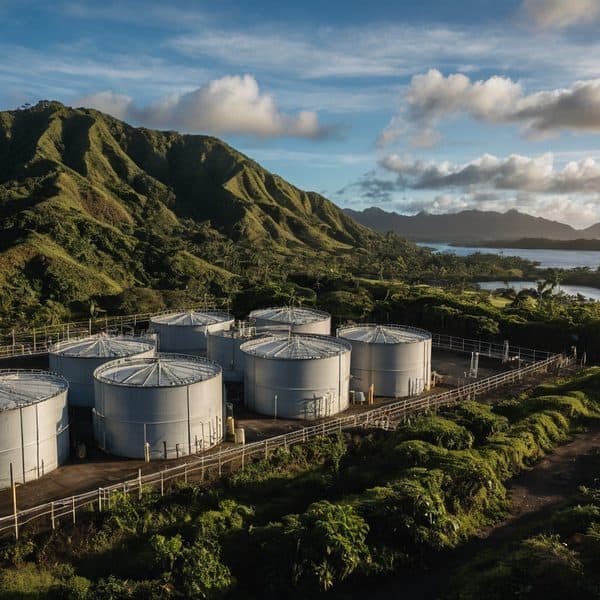
As of April 19, Fiji held about 45 million litres of fuel on land, with an additional 22 million litres expected to arrive before the end of the month, Rabuka said. That brings April’s available supply to roughly 67 million litres — “close to half” of national storage capacity — against an average daily national consumption of about 2.5 million litres. Based on normal usage, he warned stocks would draw down to about 40 million litres, or roughly 29 percent of storage capacity, by the end of April as part of routine supply-cycle activity.
The government emphasised that the present problem is not a physical shortage but a global price crisis. Rabuka pointed to sharp price rises driven by the war in the Middle East, disruptions to shipping through the Strait of Hormuz and higher costs in global markets. Fuel is purchased in US dollars, he noted, and those international increases are passed through to domestic prices. The independent price regulator, the Fijian Competition and Consumer Commission (FCCC), implemented a price rise on April 1 and Rabuka said another increase is expected in May.
Looking ahead, Rabuka said fuel suppliers have committed to delivering about 118 million litres in May, which would lift national fuel stock back to more than 59 percent of storage capacity once those shipments arrive. The government described that pipeline as evidence that Fiji is operating in “Phase 1 — a normal supply situation, but under pressure from high global fuel prices.”
To cushion households, businesses and essential services, Cabinet on April 21 approved the redeployment of $56 million from the existing 2025–2026 Budget. Rabuka stressed the funding is not new borrowing but a reprioritisation of delayed projects to provide immediate support. He framed the government’s role as protecting livelihoods, maintaining essential services and supporting those most affected by rising transport and operating costs.
The announcement updates earlier warnings issued in March, when government and regulators flagged the risk to Pacific fuel supplies from heightened tensions in the Strait of Hormuz and potential disruptions to tanker movements. Those assessments prompted calls for careful monitoring; Rabuka’s latest disclosure supplies concrete import and stock figures for the first time in the current wave of price volatility.
For consumers, the immediate implication is a mixed picture: physical supply appears secure through May with committed shipments, but continued upward pressure on pump prices is likely while international markets remain unsettled. The government’s $56 million package aims to blunt some of that pain, though the full design and beneficiaries of the support measures have not yet been detailed publicly.