
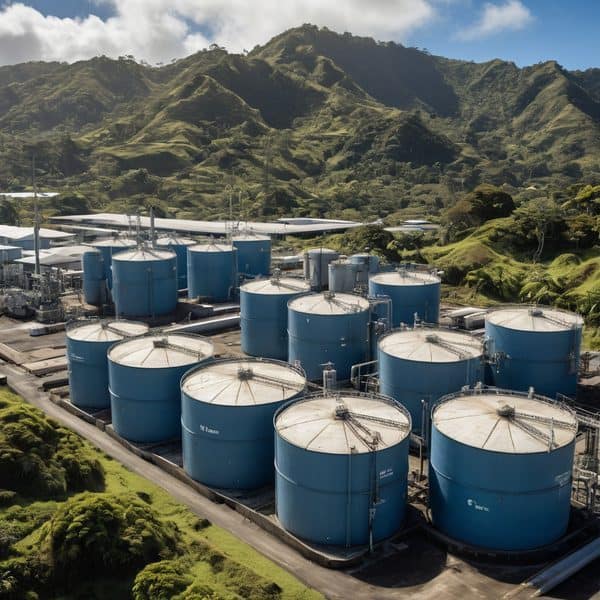
Fiji’s fuel supply is secure for now but households and businesses should prepare for higher pump prices, Prime Minister Sitiveni Rabuka said, as his Cabinet approved a $56 million response to cushion the impact of surging global costs. The latest figures released by the prime minister show the nation has sufficient stocks in the short term and large shipments due in May, even as international market pressures push local prices upward.
“As of the 19th of April 2026, Fiji’s fuel supply remains stable,” Rabuka said. Government information shows about 45 million litres of fuel are currently in stock on land, with a further 22 million litres expected to arrive before the end of April — bringing April’s total available supply to roughly 67 million litres. At an average daily consumption of about 2.5 million litres, officials expect on-hand stocks to fall to around 40 million litres by month’s end, equal to about 29 percent of national storage capacity. Rabuka described this drawdown as routine to allow safe receipt and discharge of incoming shipments.
Supply is set to strengthen in May, the prime minister said, with fuel suppliers committed to delivering roughly 118 million litres. Once those shipments arrive, national stocks are expected to recover to more than 59 percent of storage capacity, moving Fiji out of what Rabuka called “Phase 1 — a normal supply situation, but under pressure from high global fuel prices.”
The government’s immediate policy move came on April 21, when Cabinet approved the redeployment of $56 million (US$39.95 million) from the existing 2025–2026 Budget. Rabuka stressed this is not new borrowing but a reprioritisation of funds from delayed projects to provide immediate support. He said the package is focused on protecting livelihoods, maintaining essential services and supporting those most affected by the price shock, though he did not detail specific programmes or beneficiaries in his statement.
Rabuka reiterated that the current problem is a global price crisis rather than a domestic shortage. He linked the spike to the Middle East conflict, disruptions such as temporary closures of the Strait of Hormuz and rising costs in international markets. The prime minister also emphasised that the earlier price increase implemented on April 1 was set by the independent Fijian Competition and Consumer Commission (FCCC) to reflect higher purchasing costs in US dollars, not by government mandate. He warned another round of price increases is likely in May as import costs continue to climb.
The update provides firmer data than earlier government reassurances in March, when officials broadly warned of risk from geopolitical tensions but offered fewer specifics about stock levels and delivery schedules. The new disclosure — concrete litre counts, daily consumption and the May delivery commitment — aims to reassure consumers and businesses that physical availability is not the issue, even if affordability is becoming acute.
Fiji imports all its fuel and is therefore vulnerable to swings in global crude and refined product markets, exchange rates and freight costs. With the Cabinet’s $56 million redeployment now approved, attention will turn to the shape and speed of the government’s support measures and whether they can blunt the immediate cost impact for transport operators, public services and low-income households as international prices remain volatile.