
Fiji’s fuel supply is stable for now but households and businesses face further price pain after Cabinet approved a $56 million response to cushion the impact of rising global fuel costs, Prime Minister Sitiveni Rabuka said this week.
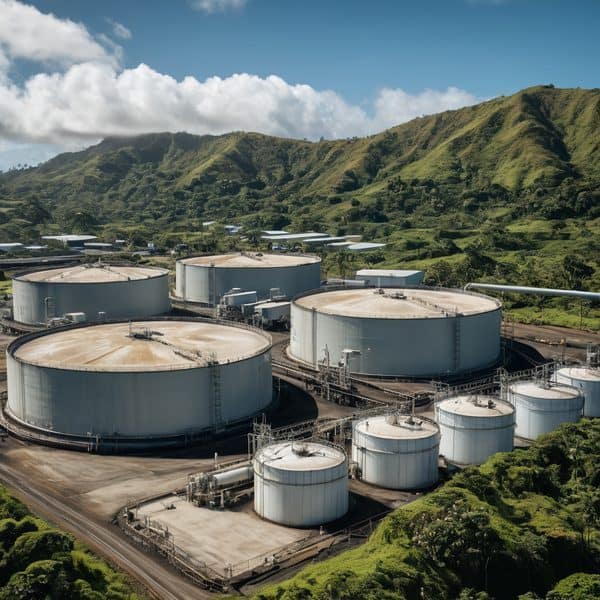
Speaking on 19 April and briefing Cabinet on 21 April, Rabuka gave detailed stock figures to underline that the country is not facing a shortage. He said about 45 million litres of fuel were on land as of 19 April, with a further 22 million litres due before the end of the month — a combined 67 million litres of supply for April. Daily consumption remains steady at roughly 2.5 million litres, he added. Based on that usage, stocks are projected to fall to around 40 million litres by the end of April, equivalent to about 29 percent of national storage capacity; Rabuka described that drawdown as routine and part of the normal supply cycle.
Looking ahead, Rabuka said suppliers have committed to deliver roughly 118 million litres in May, which the government expects will lift national stocks back to over 59 percent of storage capacity. He characterised Fiji’s current operating point as “Phase 1 — a normal supply situation, but under pressure from high global fuel prices,” stressing the problem is rising costs rather than an absence of fuel.
To blunt the domestic impact of higher import bills, Cabinet on 21 April approved the redeployment of F$56 million (US$39.95 million) within the government’s existing 2025–2026 budget. Rabuka said the money is not new debt but funds reprioritised from projects that have been delayed; the announced aims are to protect livelihoods, maintain essential services and support those most affected by price increases, though the government has not published a full breakdown of how the redeployed funding will be allocated.
The prime minister pointed to international drivers for the price rises: the war in the Middle East, disruptions in and around the Strait of Hormuz, and higher global market costs. He reiterated that fuel is purchased in US dollars and that increases in international prices are passed through to domestic consumers. The independent price regulator, the Fijian Competition and Consumer Commission (FCCC), raised retail fuel prices on 1 April and Rabuka warned a further adjustment is anticipated in May to reflect updated import costs.
The update comes after months of concern in Fiji and across the Pacific that tensions affecting the Strait of Hormuz could tighten supplies and lift prices. Government assurances in March emphasised monitoring of the situation; Rabuka’s latest figures are the most specific supply snapshot since then and are intended to reassure the public that shipments are planned and stocks will recover in May even as the country absorbs higher global prices.
For now, the government’s immediate policy response is financial reprioritisation rather than market intervention, and the timing of incoming May shipments will determine how quickly domestic stocks and retail stability are restored.