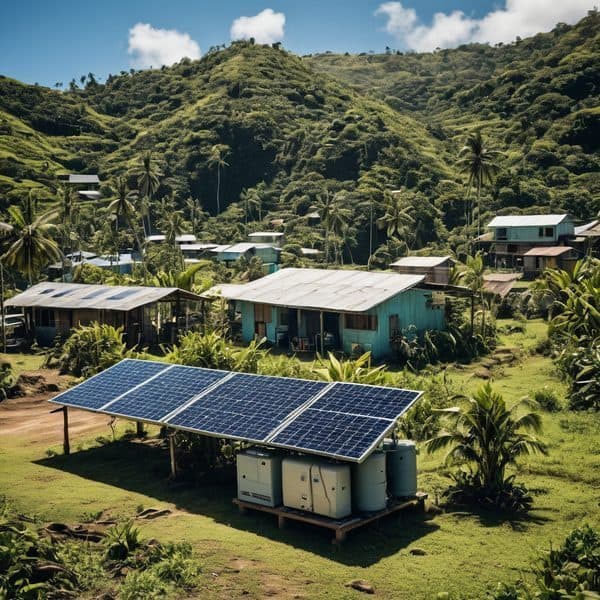
A new United Nations report warns Fiji’s shift toward renewable energy risks widening existing inequalities unless the transition is managed more inclusively and transparently. The Economic and Social Survey of Asia and the Pacific 2026, published by the UN Economic and Social Commission for Asia and the Pacific (ESCAP), cautions that the costs and benefits of energy transitions have not been evenly shared and that vulnerable groups could shoulder the heaviest burdens in Fiji.
ESCAP’s survey highlights a split picture on the ground: renewable electricity supply in Fiji can be high when hydrological conditions are favourable, but many outer islands remain reliant on diesel generation. That continued dependence on imported fuel — and the higher costs and logistical hurdles involved in supplying remote communities — has reinforced perceptions that clean energy gains are concentrated in urban centres and larger islands. The report says such imbalances risk eroding public trust in national renewable energy strategies and could hamper long-term decarbonisation goals.
Beyond the technical mix of generation sources, the survey raises concerns about how renewable projects are being implemented. ESCAP flagged limited community consultation, centralised land acquisition practices and unequal sharing of project benefits as recurring problems. Without meaningful local engagement and transparent benefit-sharing mechanisms, the report warns, projects are vulnerable to resistance from communities, legal challenges and political backlash — outcomes that could delay or even reverse reforms.
The findings also place Fiji’s experience in a broader regional context. ESCAP notes that energy transitions can produce concentrated social and economic impacts: job losses in fossil fuel–dependent sectors, rising energy costs for certain groups, and an erosion of fiscal support in areas that formerly relied on oil and gas revenues. Low-income households, people living in remote or rural areas, and workers in fossil-dependent livelihoods are singled out as likely to be disproportionately affected unless targeted measures are put in place.
The report’s warnings come against a backdrop of Fiji’s wider exposure to global fuel market volatility. With the country importing all of its fuel needs, international price swings quickly transmit to local markets and household budgets, compounding the risks identified by ESCAP for diesel-reliant outer islands. That exposure makes the timing and social framing of the energy transition politically and economically consequential for policymakers.
ESCAP calls for a “just transition” approach that aligns environmental objectives with social equity and community inclusion. The survey underlines the need for inclusive dialogue, improved transparency in land and benefit-sharing arrangements, and social protection and reskilling measures for affected workers and communities. For Fiji, the commission’s message is clear: technical progress on renewables must be matched by governance reforms and locally anchored processes if the transition is to be sustainable and broadly supported.
As governments and development partners plan further investments in Fiji’s energy future, the ESCAP report raises a practical challenge: shifting to low-carbon electricity while ensuring that remote islands, low-income households and historically marginalised communities gain rather than lose from the transition. The way those trade-offs are handled now will determine whether decarbonisation strengthens social resilience or deepens existing inequalities.
Leave a comment