
BERLIN — UN Climate Change Executive Secretary Simon Stiell warned on April 22 that rising fossil fuel costs and mounting global instability are exerting acute pressure on national economies, and urged a rapid shift from negotiation to implementation to shield vulnerable countries from deepening economic and climate risks.
Speaking at the opening of the Petersberg Climate Dialogue in Berlin, Stiell said the latest war in the Middle East had “locked-in much higher fossil fuel costs for months and likely years to come,” a shock he said is delivering “a gut-punch to every nation and billions of households.” He warned that the combined effect of price shocks and slowed growth is producing what he called “fossil-fuel driven stagflation” — a phenomenon, he said, that is “driving up prices, driving down growth, pushing budgets deeper into quagmires of debt, and stripping away governments’ policy options and autonomy.”
Stiell used the global platform to press for a stronger focus on turning Paris Agreement commitments into on-the-ground projects. “Negotiations are one — and they remain critical. Now, in this era of implementation — we must turn them into projects on the ground,” he said, calling in particular for the Action Agenda to be elevated alongside negotiations. He said the initiative has been “mobilizing trillions of dollars within the real economy” and insisted the clean energy transition is now “irreversible,” but must be accelerated to deliver security and affordability.
The UN official urged significantly more investment for developing countries and closer international cooperation to fast-track critical systems, naming energy systems, methane reduction and food systems as priority areas. He highlighted methane as an “ultra‑potent greenhouse gas,” arguing that slashing methane emissions by 2030 would have an outsized impact on slowing global heating. Stiell also stressed resilience measures, including the urgent rollout of early warning systems to save lives during extreme weather events.
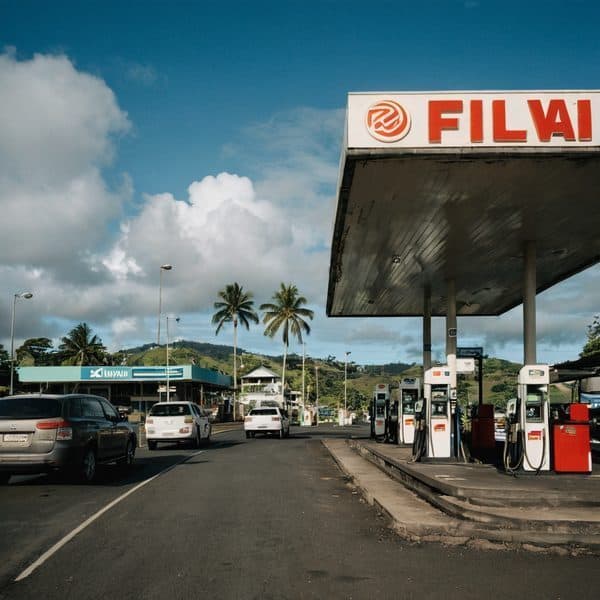
The warning comes as world leaders and Pacific governments confront real-time consequences of higher fuel costs and disrupted food and fertiliser supplies. Pacific-focused analysts have already cautioned island states about rising fuel prices since tensions in the Strait of Hormuz intensified earlier this year, and regional ministers are weighing hard choices over food security, transport costs and fiscal strain. Fiji and other small island states have repeatedly called for more predictable finance and technical support to manage both climate impacts and energy transitions.
UN Secretary‑General António Guterres, attending the same forum, echoed the push for rapid deployment of clean energy, urging countries to “unleash the renewables revolution” to reduce dependence on volatile fossil fuel markets. Stiell framed those calls against the timeline of climate review processes, urging measurable progress ahead of the next global stocktake at COP33 so that commitments made at COP28 translate into tangible emissions cuts and resilience investments.
For Pacific nations, Stiell’s message underscores two converging risks: immediate economic hardship from volatile fuel markets and the long‑term need to accelerate transition and adaptation. The UN’s renewed call for finance and implementation will be a focal point for island delegations preparing for upcoming climate negotiations and for domestic policymakers seeking to protect vulnerable communities while navigating constrained budgets.