
Prime Minister Sitiveni Rabuka has moved to calm concerns over Fiji’s fuel availability while warning households and businesses to brace for further price pressure, announcing a $56 million (US$39.95 million) budget reprioritisation to ease the impact of soaring global fuel costs.
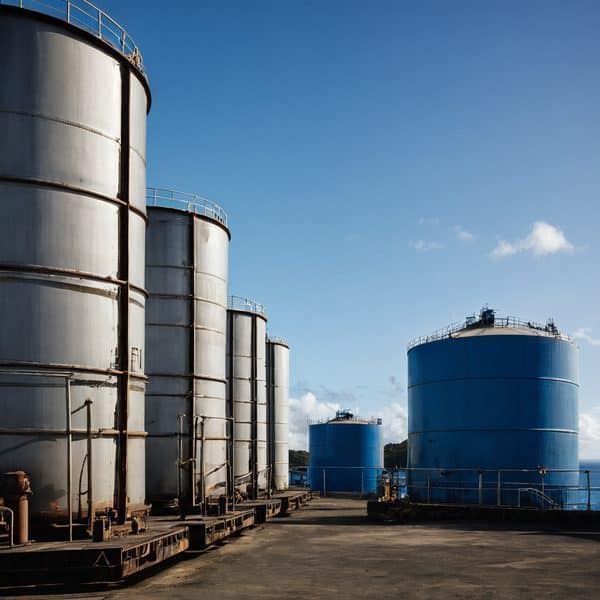
In a statement detailing the country’s fuel position, Rabuka said that as of April 19, Fiji had about 45 million litres of fuel stored on land and an additional 22 million litres expected to arrive before the end of the month. That brings April’s total available supply to roughly 67 million litres — “close to half” of national storage capacity. With the nation using around 2.5 million litres a day, Rabuka noted the current stocks equate to roughly a month’s consumption and stressed there is no shortage of fuel.
Rabuka told reporters that stocks will fall to about 40 million litres, or roughly 29 percent of storage capacity, by the end of April — a drawdown he described as part of the “normal supply cycle,” allowing tanks to be cleared so incoming shipments can be safely discharged. He said the situation should improve in May, with fuel suppliers committed to delivering about 118 million litres; those shipments are expected to lift national stocks to over 59 percent of storage capacity once received.
The prime minister made clear the immediate problem facing Fijians is price, not supply. He blamed the spike in prices on the widening conflict in the Middle East, disruptions to passage through the Strait of Hormuz and higher global market costs. He reiterated that fuel imports are paid in US dollars and that the independent regulator, the Fijian Competition and Consumer Commission (FCCC), increased domestic pump prices on April 1 to reflect higher purchasing costs. Rabuka warned another FCCC-led price rise could be announced in May as global pressures persist.
To cushion vulnerable households, transport operators and key services, Cabinet on April 21 approved the redeployment of $56 million from the existing 2025–2026 Budget. Rabuka emphasised the funds are not new borrowing but a reprioritisation from delayed projects to provide immediate relief — a measure aimed at “protecting livelihoods, maintaining essential services, and supporting the most” affected, he said.
This latest bulletin quantifies and updates earlier government assurances in March, when ministers warned Fiji was monitoring risks after tensions in the Middle East raised concerns about potential disruptions to global oil routes. The new figures provide the most detailed public snapshot yet of on-island reserves and the planned inbound shipments that officials say will stabilise physical supply even as price volatility continues.
While the government frames the episode as a global price crisis rather than a supply emergency, the combination of tight international markets and Fiji’s full dependence on imported fuel underscores ongoing vulnerability. The coming weeks will show whether the promised May deliveries and the $56 million relief package are sufficient to blunt the economic pain for businesses and households facing higher transport and operating costs.