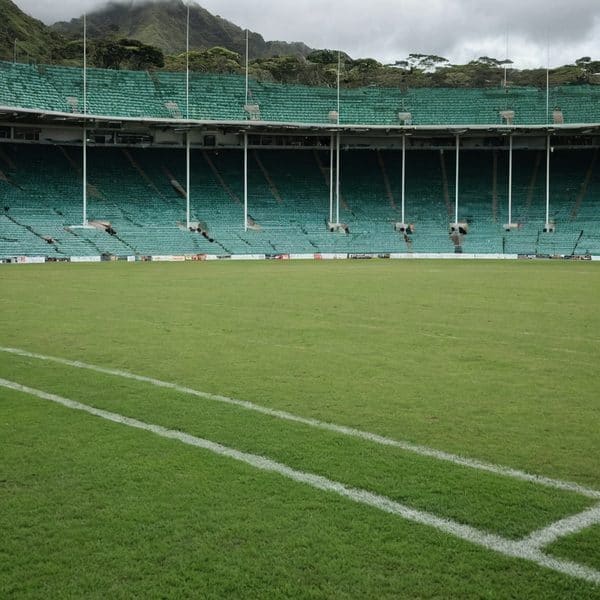
Sāmoa has signalled a fresh bid to secure its own Super Rugby Pacific franchise as part of a strategic shift to build the game around homegrown players and stronger domestic pathways, Lakapi Sāmoa’s chief executive said on Friday. Seumanu Douglas Ngau Chun told Pacific Huddle reporter Tuilagi William Leolahi the idea is still evolving but could become “realistic within the next two to three years” if new funding arrives and domestic competitions are bolstered.
Seumanu tied the proposal to the AU$150 million Veimoana Partnership — a five‑year regional funding package aimed at strengthening rugby pathways in Sāmoa, Tonga and Fiji. He said any move toward a stand‑alone Super Rugby franchise would likely need assistance from the Australian government alongside the Veimoana investment and builds on recent reforms in Sāmoa’s school and village competitions designed to give young players more consistent game time.
The push reflects deep frustration inside Lakapi Sāmoa about the flow of talent off island. Seumanu warned a major obstacle remains holding players long enough in the local system to develop into Super Rugby‑level talent. “There’s a high turnover of players moving overseas through seasonal workers, through other schemes, and going to play club rugby overseas,” he told Leolahi, adding that many players miss out on crucial development stages from under‑20s up to Manu Sāmoa selection.
Sāmoa’s consideration of a franchise comes amid renewed questions about the future of Moana Pasifika, the combined Pacific professional team established to provide pathways for Pacific Island players. Lakapi Sāmoa withdrew support for Moana Pasifika earlier this year, Seumanu said, citing frustration that locally developed players were not getting selected into the Super Rugby side. He also said combined development squads with Tonga did not lead to sufficient opportunities in the Super Rugby team itself.
Super Rugby Pacific chief executive Jack Mesley confirmed discussions continue about the competition’s future and said there remains interest from new parties wanting to join the competition. “We have inbound interest to join this competition,” Mesley said, while also describing Super Rugby Pacific as “about something bigger than just winning the games.” Mesley has previously sought to reassure stakeholders the competition is stable despite uncertainty around specific franchises.
Officials in Sāmoa have already begun practical steps to shore up talent pools: cutting competition zones to concentrate talent, increasing the number of matches played, and reshaping school tournaments to restart momentum at the grassroots. Those reforms, Seumanu said, are intended to build depth so players are better prepared for higher levels and less likely to leave the pathway prematurely.
For regional neighbours like Fiji, the Sāmoa initiative highlights shared challenges: retaining talent, creating professional pathways, and balancing international eligibility rules that often drive players to New Zealand and Australia. Fiji Rugby Union has been pursuing its own long‑term development plans in recent years, and leaders across the Pacific will be watching closely as Sāmoa’s proposal progresses. Seumanu stressed that the timeline and any firm commitment hinge on securing the Veimoana funding and agreements with partners; until then, the move remains an evolving strategy rather than an immediate entry into Super Rugby Pacific.
Leave a comment