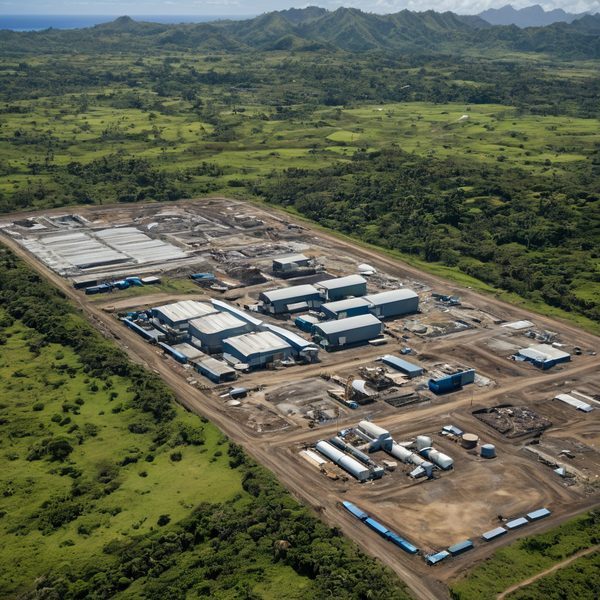
Consultations on a proposed waste-to-energy plant in Vuda began last night, after the project’s environmental impact assessment (EIA) was formally submitted to the Department of Environment Fiji yesterday, The Next Generation (TNG) Fiji announced.
The TNG proposal outlines an industrial precinct centred on an energy-from-waste facility designed to process up to 900,000 tonnes of solid waste annually. The plant would use two combustion lines, each rated at 40 megawatts, giving a total generation capacity of 80 MW. Plans also include a dedicated deep-water port to receive baled waste and construction materials for the facility and its associated infrastructure.
Rob Cromb, a TNG project partner, said the project aims to convert non-recyclable municipal waste—much of the material currently accumulating in landfills or ending up dumped along coasts and waterways—into a renewable energy source. “This project offers Fiji an opportunity to address waste and energy head on, using technology that has been successfully implemented across the world,” he said, stressing the use of “proven, controlled technologies” and compliance with international environmental standards. According to TNG, more than 2,500 similar plants operate globally.
TNG says the Vuda site was chosen for its proximity to existing waste collection routes, port access and major energy infrastructure, making it logistically suitable for both feedstock delivery and grid connection. The company describes a thermal conversion process in which non-recyclable waste is heated in a regulated environment to generate steam that drives turbines; the process, TNG says, destroys pathogens and toxins and leaves only an inert ash residue that occupies far less space than raw waste.
Proponents argue the facility could help ease the pressure on landfills that are nearing capacity as Fiji’s population and tourism sector grow. TNG also highlights potential economic benefits: construction and operation would create hundreds of jobs, foster technical training and increase opportunities for local suppliers. The plant’s self-sufficiency—using part of the energy it generates to run operations and feeding surplus into the national grid—is presented as a way to reduce reliance on imported diesel and bunker fuel and relieve pressure on foreign exchange reserves.
The proposal has drawn significant public opposition. TNG acknowledged receipt of a petition signed by more than 8,000 people calling for the project to be halted over fears about emissions, coastal heritage and ecological damage. Cromb said those concerns are “deeply felt” and argued much resistance stems from memories of older incineration technology; he said modern facilities employ stringent emission controls, continuous monitoring and filtration systems similar to those used in Europe and aligned with World Health Organization standards.
The EIA now sits with the Department of Environment Fiji and will form a central part of the current consultation process, TNG said. Stakeholder meetings and public submissions are expected to feed into the department’s review, although no timetable for assessment or decision-making was provided by the company.
Leave a comment