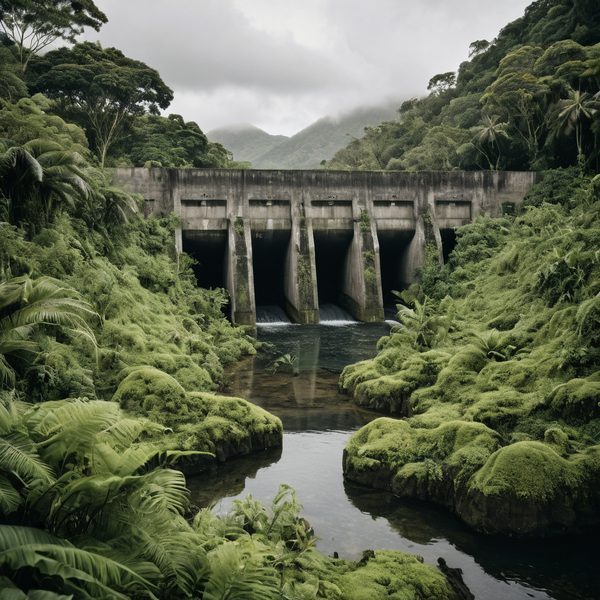
New details have emerged about World War II-era remains in the interior Ra village of Nubumakita, where the community’s Qase ni Turaga, Sitiveni Waqa, has provided fresh firsthand information about wartime infrastructure still visible on the landscape. In an interview with The Sunday Times, the 56‑year‑old chief recounted how soldiers used the ancient Tuleita trail to reach the village, built a small army camp and a makeshift hospital, and constructed a concrete dam that for a time supplied water to both the camp and the settlement.
Waqa said the troops journeyed from Nadarivatu along the Tuleita route to set up camp in Nubumakita. “We were told the soldiers came through the old ancestral Tuleita trail to get to Nubumakita. They had travelled from Nadarivatu through the trail to Nubumakita, where they set up camp,” he told reporters. The trail, long used by local communities, runs through Tomaniivi and on toward Nakorovatu and Vunidawa in Naitasiri. Its significance during the war, Waqa said, was that it avoids crossings of rivers and waterways, allowing easier movement of vehicles and troops.
Located just metres from the village, a concrete structure villagers call the old dam is one of the most tangible reminders of that period. Waqa described how the soldiers built the dam as a primary water source for the army camp and laid pipes from it to a small hospital nearby so wounded and sick personnel could be treated. “They connected pipes to the hospital, so it made it easy for them to treat people and to cater for the camp,” he said. Those pipes later allowed the village to tap the dam’s water after the soldiers departed, but they have since been dismantled.
A newer dam, constructed a few metres above the wartime structure, now supplies the community. “There is water flowing through it today, but we don’t use it like we use to in the past,” Waqa said of the old dam. While remnants of the hospital site close to the village are maintained, the older concrete dam remains largely untouched despite still holding water that flows into the adjacent Qaitabua River.
The river’s ecology appears to be changing, villagers say. Historically the Qaitabua supported only native freshwater species such as duna (freshwater eels) and ura (prawns), Waqa said, but in recent years tilapia (malea) — a non‑native fish common elsewhere in Fiji — has started to appear. The chief’s observation points to an ecological shift that could have implications for local fisheries and river health, though the source and timeframe of tilapia’s arrival were not established in the interview.
Another wartime imprint that endures is the narrow dirt road that runs through Nubumakita beside the old hospital site. Once traversed by military jeeps, the road follows the same alignment as the ancient Tuleita trail and was, Waqa recalled, the principal overland connection between parts of Ra and Naitasiri before formal roads were built. “These old trails do not cross any waterway or river all the way to Nakorovatu,” he said. “Since it was a dry trail throughout, the soldiers were able to move around easily on their jeeps.”
The new information, provided directly by a village leader with memories shaped by elders’ accounts, adds detail to earlier reporting on wartime relics in Fiji’s interior by identifying how military engineering temporarily reshaped local infrastructure — from water supply and health facilities to transport routes — and how those changes have left a mixed legacy for present‑day communities. The accounts also raise fresh questions about preserving these sites and monitoring ongoing environmental changes in the Qaitabua River.
Leave a comment