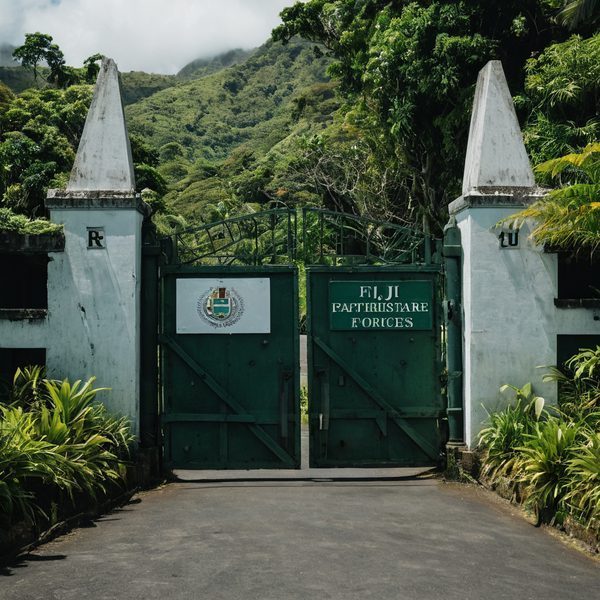
The Fiji Trades Union Congress has urged the Constitution Review Commission to urgently clarify a provision it says leaves the military’s role dangerously vague and could be read to permit extra‑constitutional action. FTUC general secretary Felix Anthony warned yesterday that the wording of Section 131(2) of the 2013 Constitution—“it shall be the overall responsibility of the Republic of Fiji Military Forces to ensure at all times the security, defence and wellbeing of Fiji and all Fijians”—has long generated conflicting interpretations about the limits of military authority.
Speaking at public submissions to the CRC, Anthony said the clause “needs more clarity” because some readings could be used to justify the military going beyond traditional defence duties. “Does this mean that they can take over the role of Government and replace Government in doing so? Or would they be subject to civil authority or a civil government?” he asked, urging explicit constitutional language to prevent misuse.
Anthony warned that the current ambiguity risks creating a path to what he called “legal coups.” “There’s one interpretation here which is if the military does take over, it’d be quite legal for them to do so because the Constitution allows them to do so,” he said. “We won’t have any more illegal coups in this country. It’ll be all legal. That’s what we’ve been told.” He argued such an outcome would undermine democratic governance and the rule of law.
The FTUC submission stressed the importance of maintaining clear civilian control of the Republic of Fiji Military Forces. Anthony said the RFMF should be accountable to the elected government, reporting through the Minister of Home Affairs, and that the Constitution must make those lines of oversight explicit to align with democratic norms.
The call for clarification comes as Fiji undertakes a broader review of the 2013 Constitution. The government has moved to establish a CRC after Cabinet approved steps earlier this year to amend parts of the charter, including procedures for constitutional change. That process has prompted public debate about contested provisions of the 2013 text, and legal experts have previously weighed in: Professor Anthony Regan has argued the wording of Section 131(2) does not itself make the military guardian of the Constitution and that sensitive disputes are better resolved through courts and civilian institutions.
The urgency of Anthony’s submission is compounded by the Supreme Court’s recent rulings affirming the 2013 Constitution as the country’s binding legal framework while setting strict thresholds for any amendment—requirements that would likely shape how and whether contentious clauses like Section 131(2) can be rewritten. The CRC will collate submissions and advise on possible changes, but any amendment will face high parliamentary and possibly referendum hurdles under the current legal framework.
Anthony’s intervention adds an organised labour voice to a growing chorus calling for clarity and legitimacy in Fiji’s constitutional arrangements. His submission asks the CRC to specify the military’s remit and safeguards to ensure oversight by elected officials, a proposal that, if taken up, could be central to future debates over civil‑military relations in Fiji.
Leave a comment