
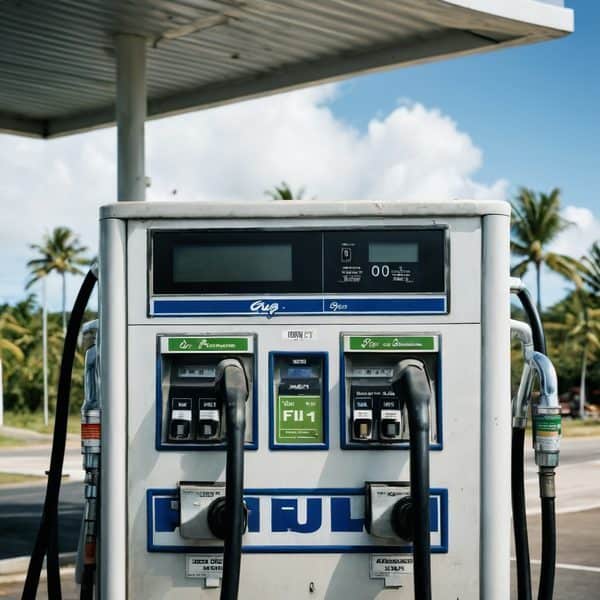
Prime Minister Sitiveni Rabuka has unveiled a $56 million (US$39.95 million) government package to blunt the impact of surging global fuel prices, while urging Fijians that the country’s fuel supply remains secure despite looming cost pressures. The Cabinet approved the redeployment of funds from delayed projects on April 21, Rabuka said, stressing the money is not new borrowing but a reprioritisation within the 2025–2026 Budget to support families, businesses and essential services.
Giving the most detailed public update to date, Rabuka said Fiji had about 45 million litres of fuel in stock on land as of April 19, with a further 22 million litres expected to arrive before the end of April. That brings total available supply for the month to roughly 67 million litres — close to half of national storage capacity. With daily consumption running at about 2.5 million litres, Rabuka warned stocks would draw down to around 40 million litres, or roughly 29 percent of capacity, by the end of April as part of a routine supply cycle to allow safe discharge of incoming shipments.
Looking beyond April, the Prime Minister said suppliers have committed to deliver about 118 million litres in May, a boost that is expected to lift national stocks to over 59 percent of storage capacity and “rebound strongly.” Rabuka characterised the current situation as Phase 1 — a normal supply position under pressure from high global prices — and reiterated that Fiji is not facing a domestic shortage of fuel.
Rabuka attributed the immediate problem to a global price crisis driven by disturbances in international markets, including tensions in the Middle East and disruptions to shipping through the Strait of Hormuz. He noted that fuel is purchased in US dollars and increases in global prices are passed through to the domestic market. That was the rationale cited by the independent regulator, the Fijian Competition and Consumer Commission (FCCC), when it approved a fuel price increase that took effect on April 1; Rabuka warned another rise in prices is likely in May.
The government’s $56 million response is aimed at cushioning consumers and critical sectors from the expected price shock, Rabuka said. By reallocating funds from projects whose implementation has been delayed, the administration seeks to provide immediate relief without increasing debt. He framed the move as “responsible government” managing an external price shock while maintaining supply security.
This announcement marks an escalation from earlier government messaging in March, when ministers were mainly monitoring the fallout from international events and reassuring the public about import arrangements. The new disclosure provides concrete stock figures, a projection of end-of-month levels and firm commitments from suppliers for May shipments — information intended to separate supply security from affordability concerns.
While the measures should ease some short-term hardship, the government and the FCCC will remain under pressure to manage subsidy targeting and the timing of any further price adjustments as global market volatility continues.