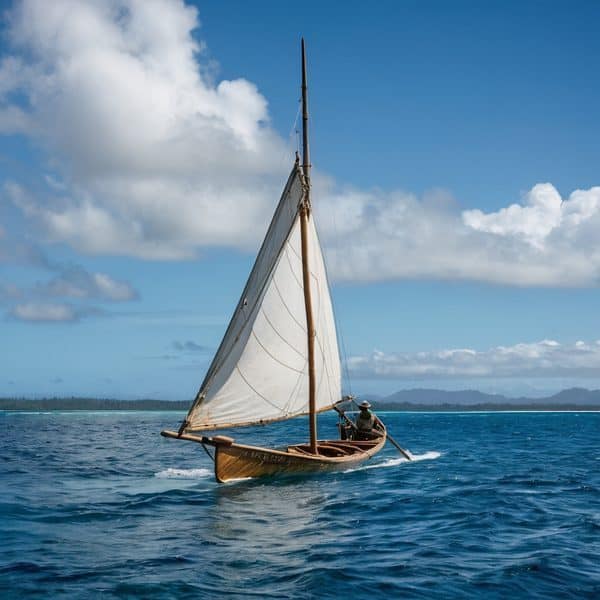
MAJURO — Pacific shipping, the lifeline that connects remote island communities to essential goods and services, faces a deepening crisis that experts say can be eased in the near term by a shift to wind-assisted propulsion and other low-carbon technologies tailored to regional needs.
Speaking at a regional discussion on low-carbon maritime transport in Majuro on April 10, Natasha Chan, assistant legal researcher at the Micronesian Centre for Sustainable Transport, warned that Pacific fleets remain dangerously reliant on aging vessels and imported fossil fuels. “Shipping is for us as railways, canals and freeways are for developed countries,” Chan said. “It is our absolute lifeline.” She described a sector trapped in a “vicious cycle” of weak investment, limited insurance capacity and dependence on donated or end-of-life ships that leave many services substandard and routes unprofitable.
What is new in the latest debate is a renewed push by Pacific experts to prioritise wind-assisted technologies as a practical, regionally appropriate solution. Chan cited research indicating that with existing, mature technologies – properly adapted to Pacific vessel sizes and operating patterns – fuel savings of at least 40 percent are achievable today. That figure marks a major uptick from earlier Pacific trials: wind-assisted systems tested during the 1980s fuel crisis showed about 30 percent fuel savings, but modern materials and designs, proponents argue, can deliver significantly better performance.
Global decarbonisation advances, such as hydrogen projects in China, France and Norway, were acknowledged at the Majuro event, but speakers stressed that many of those solutions are ill-suited to the Pacific’s dispersed geographies and small-ship profiles. “What is not happening is the investment in research and development at our scale of vessels,” Chan said. “It is not a case of simply taking international market leaders and scaling them down.” The call is for Pacific-focused R&D, pilot projects and financing mechanisms that recognise the region’s long distances, thin trade volumes and high maritime connectivity costs.
The push for wind-assisted systems intersects with recent regional and national moves to strengthen maritime governance. Since last year the International Maritime Organization established a regional presence office in Suva, and Fiji has advanced policy measures including reviews of maritime regulation and discussions on mandatory shipwreck insurance to curb derelict vessels. Advocates say those governance steps must be matched by targeted climate financing to support retrofits, new vessel procurement and local capacity building so fuel and emissions savings translate into sustained service improvements.
Fiji’s Climate Change Minister, in separate remarks included in the same Pacific bulletin, outlined priorities to accelerate climate action across the region — a policy backdrop that proponents of maritime decarbonisation say should now explicitly encompass shipping transitions. The timing matters: Pacific communities already face the real-world consequences of irregular shipping, from empty store shelves to fuel shortages and social isolation, and rising global fuel prices threaten to worsen the picture for island economies and workers.
Experts at Majuro urged a pragmatic, phased strategy: scale up wind-assisted and hybrid systems on domestic and regional routes where fuel savings and payback periods are strongest; pilot new technologies with government and donor support; and create insurance and financing instruments that lower the cost of entry for small operators. If implemented, proponents say, immediate fuel savings could reduce operating costs, improve service reliability and contribute directly to the region’s climate resilience — shifting the narrative from dependence on unsuitable global solutions to tailored Pacific pathways for sustainable maritime transport.
Leave a comment