
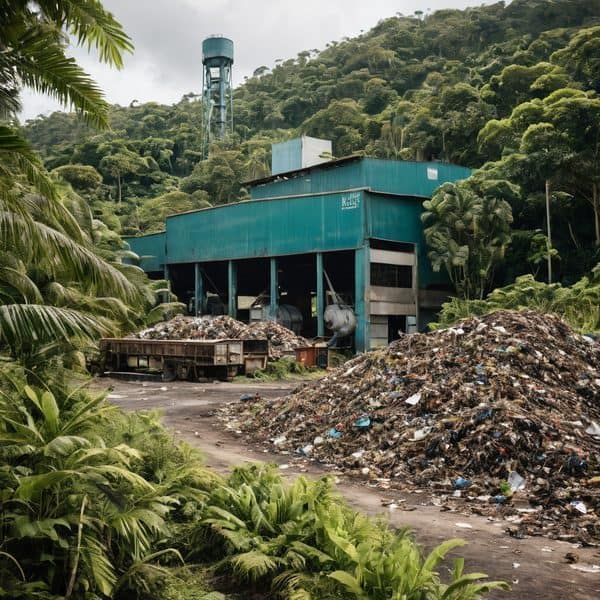
The Next Generation (Fiji) Pte Limited has clarified that its proposed Vuda Energy‑from‑Waste facility will accept only everyday household and commercial rubbish — not hazardous or industrial toxic wastes — in a statement issued as it responds to recent government concerns. The company said the plant is specifically designed to handle non‑hazardous municipal solid waste types that currently end up in Fiji’s landfills.
TNG Fiji listed the streams intended for processing as food and organic waste, paper and cardboard, plastics, textiles, wood, garden waste and non‑recyclable residual material that cannot be recovered. “These materials are the same types of waste already generated daily by communities across Fiji and disposed of in landfill sites,” the company said, adding emphatically that the facility “would not accept hazardous waste under any circumstances.” TNG also set out what the plant will not receive, saying: “What does NOT go into an Energy‑from‑Waste plant includes hazardous chemical waste, medical or clinical waste, radioactive materials and industrial toxic waste.”
The statement was issued in direct response to concerns raised by Assistant Minister Lenora Qereqeretabua, whose remarks prompted renewed scrutiny over the project’s scope and potential environmental and public‑health implications. TNG said its Environmental Impact Assessment (EIA), prepared by international consultancy GHD, has been submitted to the Department of Environment and details the classification of waste streams and the project’s operational boundaries.
TNG further argued that its proposal aligns with Fiji’s international obligations under the Waigani Convention, the regional treaty that regulates the movement and management of hazardous wastes in the Pacific. By excluding hazardous and clinical wastes from the facility’s feedstock, the company said it is designed to operate within the stricter regulatory frameworks those waste streams require.
The clarification comes amid an ongoing debate in Fiji about the environmental and legal implications of waste‑to‑energy projects. Environmental and recycling advocates have previously warned that such plants can undermine recycling efforts by creating a steady demand for mixed waste, and the Pacific Recycling Foundation has urged caution, saying recycling must remain central to the country’s waste strategy. The Ministry of Environment and Climate Change has also emphasised that any energy‑from‑waste proposal must respect the established waste‑management hierarchy — reduce, reuse, recycle — and not supplant recycling initiatives.
Regulatory developments may shape how the Vuda proposal proceeds. The Department of Environment’s review of the EIA will be a key step, and the Ministry has been undertaking broader revisions to waste and recycling regulations, including tiered fines and categorisation of waste streams. Stakeholders awaiting the outcome say the EIA findings and any regulatory safeguards will determine whether the project can proceed without harming recycling programmes or contravening hazardous‑waste controls.
For now, TNG’s statement aims to reassure policymakers and communities that the Vuda plant is limited to municipal solid waste and that hazardous materials are explicitly excluded. The company and the Department of Environment did not provide a timeline for the EIA decision, leaving environmental groups, local councils and some ministers watching closely as the assessment and regulatory review continue.