
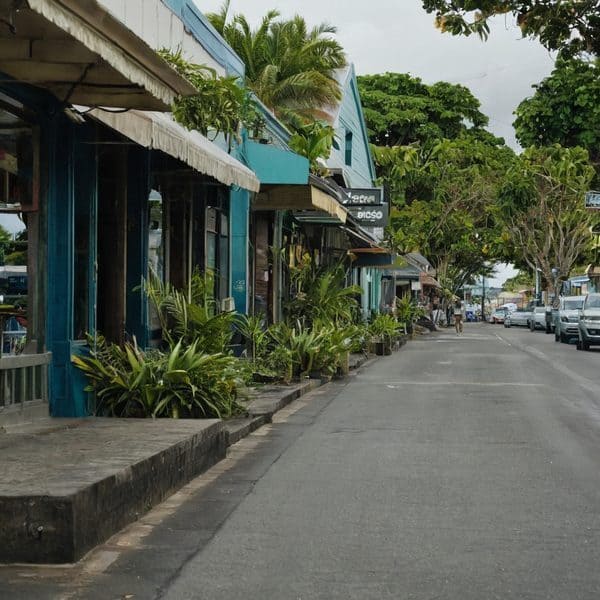
A steady thinning of Suva’s usually crowded sidewalks has been recorded over the past week, with security staff across the Central Business District reporting noticeably fewer loiterers and street dwellers — a change many are linking to the ongoing joint drug and crime operation led by the Republic of Fiji Military Forces (RFMF) and the Fiji Police Force.
Veteran security guard Jotame, who asked that his full name not be published, said the gatherings that once defined daily life around arcades and shopfronts have “thinned out significantly.” “You’ll see them on Sundays, during the meal drive,” he said. “Other than that, the number of loiterers, especially the young street dwellers, has decreased.” He estimated that on most days now only one or two people are seen resting outside shops where dozens used to gather.
Other security personnel across the CBD made similar observations. A guard at a fast-food outlet and another stationed outside an insurance office — both speaking anonymously — told reporters that the steady morning crowds formerly lingering outside a popular bakery and asking passers-by for help have all but disappeared. “Different street dwellers — kids and adults, men and women — used to hang around here asking for help, but now they are rarely seen,” one guard said. The changes began to be noticeable about a week ago, they added.
The reduction in visible street numbers is being attributed by those on the ground to the intensified joint operations by the RFMF and Fiji Police Force targeting drugs and related crime in the capital. A longer-term local street dweller, Ifereimi Naitavuni, concurred that the presence of uniformed personnel has altered behaviour in public spaces. “Because of the joint task force of the RFMF and Fiji Police, people are now more conscious of what they are doing in public,” he said. “Street dwellers and loiterers have toned down in numbers.” He added that those who used to be visibly intoxicated and disruptive have been less rowdy in recent days.
Despite the reduction within the CBD itself, the decline does not appear to mean the issue has been resolved. Security staff and Ifereimi said some groups have shifted to quieter fringes of the city, with clusters reportedly forming in Thurston Gardens and behind the Suva Bowling Club, where people have been seen washing and drying clothes. That movement suggests dispersal of activity rather than a wholesale disappearance.
The latest observations provide a practical snapshot of the immediate effects of the enforcement push, though no official figures on street dwellers’ numbers or arrests have been released. For now, security guards and those who live in the city’s public spaces say the highly visible presence of joint task forces has changed patterns of congregation and behaviour in Suva’s CBD — an evolution that authorities and social service providers will need to monitor to see whether gains are sustained or merely temporary displacements.