
FUNAFUTI — Tuvalu’s power system is stable but remains vulnerable, the government said on Monday as emergency measures give way to short-term fixes and longer-term procurement to shore up the grid.
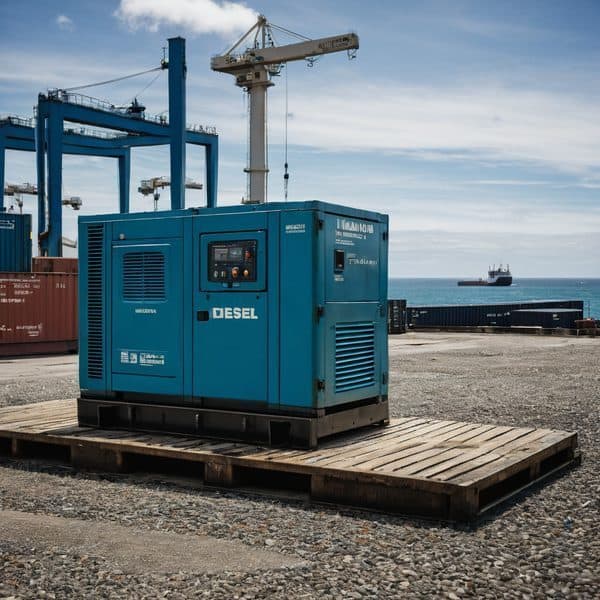
Transport and Energy Minister Simon Kofe told reporters that a rental generator funded by the Asian Development Bank (ADB) is expected to arrive on 28 May and will be deployed as a backup for three to six months while the government completes procurement of permanent units. The announcement comes as a 14‑day state of emergency — declared after recent widespread outages — ends on Monday, Kofe said.
Kofe stressed that the recent blackouts were caused by network faults rather than failures of generating units. “Generators are operating well. Recent blackouts were due to network issues, not generator faults,” he said, describing the rental plant as a stop‑gap to give technicians breathing room to complete repairs and upgrades. Technical advisors are already in-country and bids for permanent backup generators are expected to be called in early May, he added.
Tokyo has also signalled practical technical support. The Government of Japan is exploring sending a Daihatsu specialist to assist the Tuvalu Electricity Corporation (TEC) with its existing fleet, Kofe said, while Australia is providing advisers to strengthen TEC’s financial and operational systems. Public Works Department and ICT teams are working alongside TEC to harden infrastructure and system security — steps officials say are critical to avoid repeat disruptions.
There has been progress on integrating renewables into the islands’ power mix, Kofe said. A communication cable fault with the battery system has been fixed, he said, allowing solar arrays to contribute more reliably to generation. Technical teams are working on broader solar compatibility issues that had previously limited how much renewable energy could be used without risking system instability.
Practical measures to protect households and fuel supplies are also being advanced. The Department of Energy and the Red Cross are conducting a survey to identify households eligible for hardship assistance following the emergency period. Fuel supply remains stable for now, Kofe said, with the next tanker shipment scheduled for 13 May; Australia is assisting efforts to boost fuel storage capacity to guard against future disruptions.
While the rental generator and repairs should reduce immediate risk, Kofe warned that vulnerabilities persist until permanent backup and further grid upgrades are in place. The combination of improved renewables integration, international technical support, and expedited procurement is intended to move Tuvalu from emergency response to a more resilient, longer‑term footing for its electricity system.