
Tuvalu’s electricity network is holding steady but the government is rushing temporary fixes and longer-term procurement to shore up supply after a fortnight-long emergency, Transport and Energy Minister Simon Kofe said on Monday in Funafuti.
Kofe told PACNEWS that the recent blackouts were caused by network faults rather than failures of the island’s generators. “Generators are operating well. Recent blackouts were due to network issues, not generator faults,” he said as the 14‑day state of emergency came to an end. Technical teams remain on the ground to stabilise the system while backup equipment and overseas technical support are mobilised.
A rental generator financed by the Asian Development Bank (ADB) is due to arrive on 28 May and will be used as a stopgap for an estimated three to six months while procurement of permanent units is completed. Technical advisers are in-country and procurement processes for long‑term backup generators are under way, with bids expected to be called in early May, Kofe said. That timeline aims to close the gap between temporary rental capacity and a durable replacement plan.
International partners are also stepping up targeted assistance. Japan has signalled it is exploring support to send a Daihatsu specialist to help service and optimise the Daihatsu-brand engines at the Tuvalu Electricity Corporation (TEC). Australia has been coordinating technical advisers to strengthen TEC’s financial and operational systems, and is assisting plans to increase fuel storage capacity to guard against future supply interruptions. The Public Works Department and ICT teams are working with TEC to bolster infrastructure and system security.
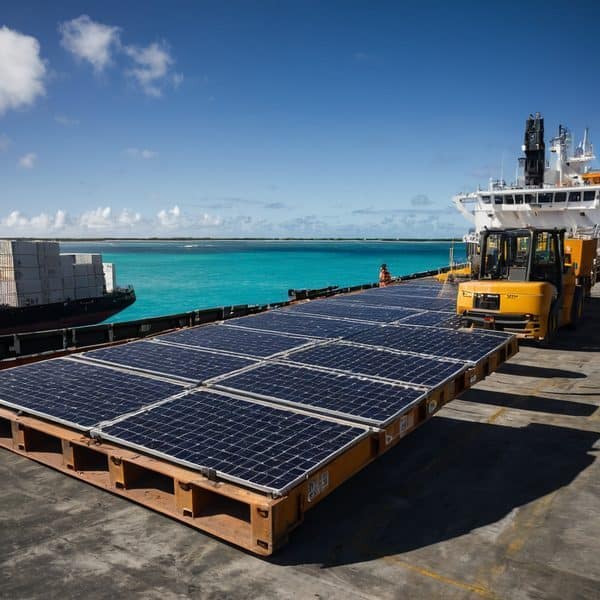
Integration of solar generation into the grid has also improved, Kofe said, removing a key constraint that previously limited renewable contribution. Communication cable problems between the battery system and older generators have been fixed, allowing solar to support generation rather than conflict with legacy equipment. That progress should help reduce reliance on imported fuel in the medium term, though officials cautioned it does not yet eliminate short‑term risks.
Fuel availability is stable for now, with the next tanker shipment scheduled for 13 May, the minister said. In parallel with technical fixes, the Department of Energy and the Red Cross have launched a household survey to identify families eligible for hardship assistance during the emergency period. Kofe said those assessments will inform targeted support for households impacted by outages.
The latest developments mark a shift from the immediate crisis management of the past two weeks to a phase of reinforced resilience — temporary rental capacity, foreign technical support, procurement of permanent generators and improved solar integration. But Kofe warned that work remains to ensure the island’s power system can withstand future shocks, particularly given Tuvalu’s exposure to climate impacts and logistical vulnerabilities.