
Tuvalu’s 14‑day State of Emergency ended on Monday, 27 April, but authorities warned the island nation’s electricity system remains vulnerable even as Government and partners move to shore up supply. Transport and Energy Minister Simon Kofe said the power network is “stable” for now, but a mix of temporary measures, technical fixes and longer‑term procurement is being rushed into place after recent blackouts linked to distribution network faults rather than generator failures.
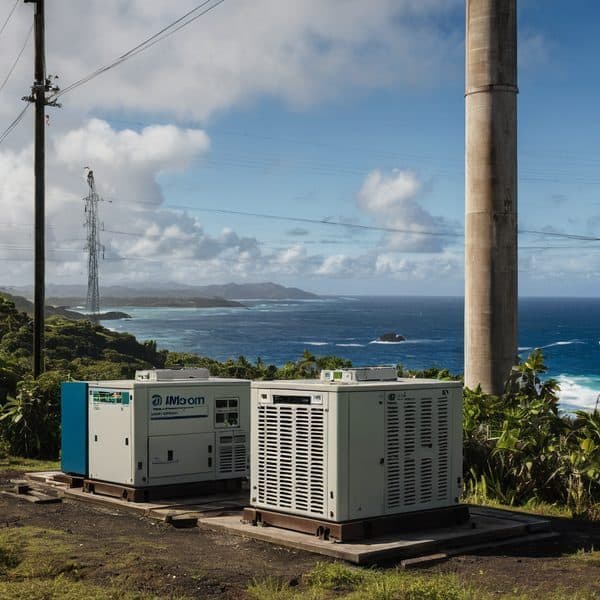
Kofe confirmed a rental backup generator funded by the Asian Development Bank (ADB) is expected to arrive on 28 May and will be used as a stopgap for three to six months while permanent units are procured. Bids for those permanent backup generators are due to be called in early May, he said, as technical teams already on the ground assess options. The timing leaves a more than month‑long window between the end of the emergency declaration and the rental unit’s arrival, a gap officials say they are managing through close monitoring and targeted repairs.
Improvements to renewable integration have eased some pressure on diesel plant, Kofe told reporters. He said recent compatibility problems between older diesel generators and new solar and battery systems have been addressed, including repairs to a communication cable in the battery system that now allows solar output to support generation. That fix, together with ongoing network maintenance, is credited with preventing further broad outages even as the grid continues to be tested.
Several international partners are providing technical support. The Government of Japan is exploring the deployment of a Daihatsu specialist to assist the Tuvalu Electricity Corporation (TEC) with existing generator maintenance, and Australian technical advisers are in‑country to help strengthen TEC’s financial systems and accounts. Public Works and ICT teams are also working with TEC to harden infrastructure and system security, officials said.
Fuel supplies remain steady, with the next tanker of diesel scheduled to arrive on 13 May. Kofe said Australia is assisting Tuvalu to boost fuel storage capacity as part of national preparations to better manage future supply disruptions. In the meantime, the Department of Energy and the Red Cross have completed a household survey to identify residents eligible for hardship assistance stemming from the emergency period.
The latest updates underline a transition from short‑term emergency response to recovery and resilience building: immediate network repairs and international technical help have reduced outage risk, while rental equipment and a procurement process aim to secure supply over the medium term. Nonetheless, the month between the emergency’s end and the arrival of the ADB‑funded rental generator will be watched closely by officials and communities dependent on a small, island grid.
In regional news, Palau leader and business pioneer Surangel Whipps Senior has died at age 86, a development that was also included in the Pacific bulletin on Monday.