
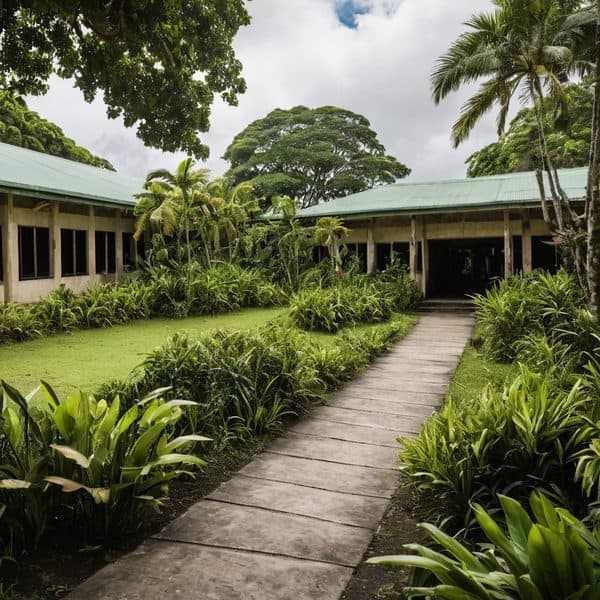
In the latest development in coverage of Pacific faith and identity, Reverend Dr Marika Bale — a Methodist minister from Gau now serving as chaplain at Pasifika Communities University in Nasese — says his role has opened him to a workplace where "beliefs, cultures, and ideas collide," an environment he describes as "both challenging and enriching."
Bale told reporters the university setting is a sharp contrast to the parish and village life where he was raised. Surrounded by students and colleagues from diverse traditions, he said the atmosphere brings deeper questioning and higher expectations that have "really grounded me on my faith." Rather than offering certainty, his campus ministry, he added, has encouraged curiosity; guiding students often pushes him "to the edge, to a position of getting to know more about God."
Academically, Bale’s work seeks to reshape how Pacific Christianity is written and taught. He said his research "focusses on the historiography of Pacific histories of Christianity," and challenges "Eurocentric narratives" that rely heavily on missionary records. Those archives, he argues, often left "the voices and the stories of the people…not captured," with indigenous actors relegated to the role of "helpers" rather than agents in their own histories.
That critique informs his classroom practice. Bale emphasises history "beyond written texts," incorporating oral and material sources so that "stories come out" — accounts long omitted from dominant narratives. He said this approach is aimed at challenging "dominant colonial systems and approaches" and making space for overlooked voices. Central to his methodology is the "matanikatuba concept" from his village upbringing, a cultural framework Bale says continues to guide his research and writing about community, leadership and obligation.
Bale also connects historical silences to contemporary social tensions. Reflecting on Fiji today, he pointed to "the lingering tension between the different races," which he ties to "persisting colonial ideologies." He warned that such ideas remain embedded in institutions — including churches — through "colonial categorisation…according to race," complicating efforts at social cohesion and shared action.
As a response, Bale called for fresh ways of moving forward that begin with reasserting identity. Simple self-knowledge, he argued, can strengthen communal resilience: "to know ourselves better" is, in his view, a prerequisite for tackling shared challenges such as climate change and poverty. Grounded in identity, culture and faith, Bale said, communities can draw on their own resources rather than relying on imposed systems.
The Pasifika Communities University post has given Bale a platform to blend ministry, scholarship and pedagogy in the service of amplifying indigenous perspectives. His statements mark the latest contribution to an ongoing conversation about decolonising Pacific histories and the role religious institutions and educators play in shaping the region’s future.