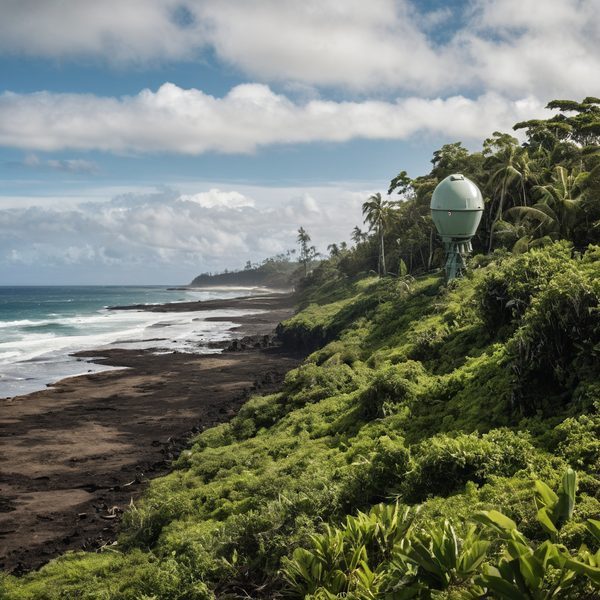
A new report by the Guam-based Pacific Centre for Island Security says the accelerating US military buildup in Palau has weakened safeguards intended to protect the island nation’s environment and sovereignty, and it singles out specific breaches that have prompted legal action and local anger. The Micronesia Security Outlook 2025, authored in part by Jodean Remengesau, criticises how installations have proceeded and warns that Palau’s place in great-power rivalry is changing everyday life for residents.
Remengesau, director at Palau’s Bureau of Agriculture within the Ministry of Agriculture, Fisheries and the Environment, told the think tank in the Palau section of the report that “the U.S military had missed and fell short of fulfilling its duties and responsibilities under the compact of the U.S with Palau.” The report documents that work to establish the first site for a tactical mobile over‑the‑horizon radar system on Angaur was carried out without required Palauan environmental earthmoving permits or the community consultations mandated by local law.
The report recounts that cleared vegetation and piles of shredded tree debris were left at the Angaur site, creating conditions conducive to an invasive coconut rhinoceros beetle outbreak; contractors later dumped some of that debris in residents’ yards in a rushed attempt to manage the problem. Governor Steven Salii of Angaur has already taken legal action: in 2023 he sued Palau’s central government, the Palau Environmental Quality Protection Board, the US government and its military contractors over the clearing of 271,807 square metres without an environmental impact assessment or permits.
The timing of the report amplifies concerns. Under the renegotiated Compact of Free Association, the United States began a US$890 million assistance package to Palau on October 1, 2023, and has explicit defence prerogatives in return. The report says this financial dependence makes Palau more likely to see expanded US military use. At the same time, a US$118 million US radar project in Palau is expected to become operational this year, further intensifying local debate over environmental oversight, transparency and shared use.
The Pacific Centre’s findings also challenge official portrayals of cooperation. What was initially presented as a single shoreline radar tower intended for mutual use by Palau and the US later emerged as two separate infrastructure deployments rather than one shared facility, the report says — a distinction that matters to Palauans worried about host‑nation control, access and environmental liabilities.
The developments come as Palauan leader Whipps made a historic first State visit to New Zealand, a diplomatic milestone that observers say underscores Palau’s efforts to broaden regional ties amid rising strategic competition in the Pacific. Analysts and local leaders who contributed to the report argue Palau faces a difficult balancing act: accepting security and economic support from the United States while trying to maintain the environmental protections, consultation processes and sovereign decision‑making that Palau’s laws and the compact were intended to guarantee.
The report’s publication and the ongoing Angaur lawsuit make the military footprint in Palau an accelerating story to watch. With the radar due online this year and compact funds flowing, critics say immediate remedies are needed: stricter adherence to Palauan permitting and consultation rules, clearer accountability for contractors, and more transparent information about the scale and purpose of US infrastructure on Palauan land.
Leave a comment