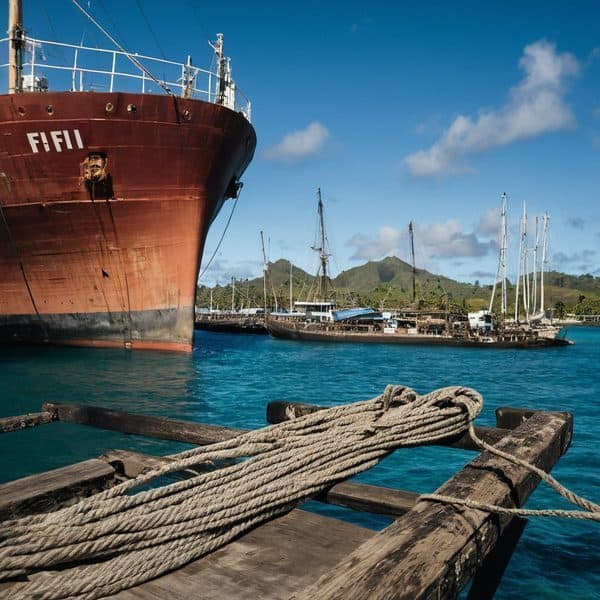
Pacific Island shipping — the lifeline that delivers food, fuel and essential goods to remote communities — is in crisis, and regional experts are urging a fast shift toward wind-assisted and other low‑carbon technologies to avert growing isolation and rising costs. Speaking at a regional discussion on low‑carbon maritime transport, Natasha Chan of the Micronesian Centre for Sustainable Transport warned the sector’s heavy reliance on ageing, fossil‑fuelled vessels leaves island nations acutely vulnerable to fuel price shocks and climate impacts (Majuro, 10 April 2026).
“For many Pacific Island communities, a delayed ship does not just mean inconvenience. It can mean empty store shelves, fuel shortages and isolation,” Chan said, underlining how critical reliable domestic shipping is across ocean‑spanning countries. She noted the region faces some of the world’s highest maritime connectivity costs, compounded by long distances between islands, small trade volumes and fleets often composed of ageing or donated vessels with weak maintenance regimes and limited insurance cover.
Chan told delegates that the Pacific is not starting from zero when it comes to solutions. Research cited at the session suggests fuel savings of at least 40 percent are achievable today if existing technologies are applied with Pacific conditions in mind. Wind‑assisted propulsion — using modern sails, kites or rotor systems to reduce engine use — was highlighted as one of the most practicable near‑term options. Historical trials during the 1980s fuel crisis showed roughly 30 percent savings; advocates say advances in materials and design could push performance further for the smaller, rugged vessels common in regional routes.
But experts cautioned obvious barriers remain. Limited investment and insurance capacity traps operators in a “vicious cycle” of using end‑of‑life ships; maintenance systems are under‑resourced and maritime workforces undervalued, Chan said. She argued the Pacific cannot simply downscale technologies developed for larger international markets and needs targeted research and development to suit local vessel sizes and operating conditions.
The call for tailored regional measures comes as international moves to decarbonise shipping intensify. Global initiatives such as proposed emissions penalties from 2028 and demonstration projects for hydrogen and other clean fuels by major maritime nations may eventually change the economics of shipping, but Chan and others stressed those pathways are not immediately suitable for domestic island services. Instead, she urged channeling development and climate finance into Pacific‑scale trials, R&D and financing models that support retrofit and new builds using mature, low‑carbon options.
The push aligns with an emerging policy environment in the region. Fiji this year has advanced a National Transport Sector Master Plan and a transport decarbonisation strategy, and Suva is home to a recently established regional office of the International Maritime Organization intended to strengthen maritime governance and safety. Analysts say pairing policy reforms — such as tighter insurance and vessel standards already under discussion in Fiji — with targeted investment could break the cycle of ageing fleets and build more resilient, lower‑cost domestic shipping.
Experts at the Majuro discussion emphasised timeliness: improving shipping efficiency and experimenting with wind‑assisted systems now could both cut fuel costs and strengthen supply chains for vulnerable islands as global markets and climate pressures shift. Without rapid, tailored action, they warned, the Pacific’s maritime lifeline will remain exposed to chronic disruption and escalating costs.
Leave a comment