A string of fresh developments across the Pacific — from urgent calls to decarbonise regional shipping to security warnings and a surge in social support — were reported in a PACNEWS bulletin on 10 April, underscoring how climate, transport, health and governance challenges are converging across island states.
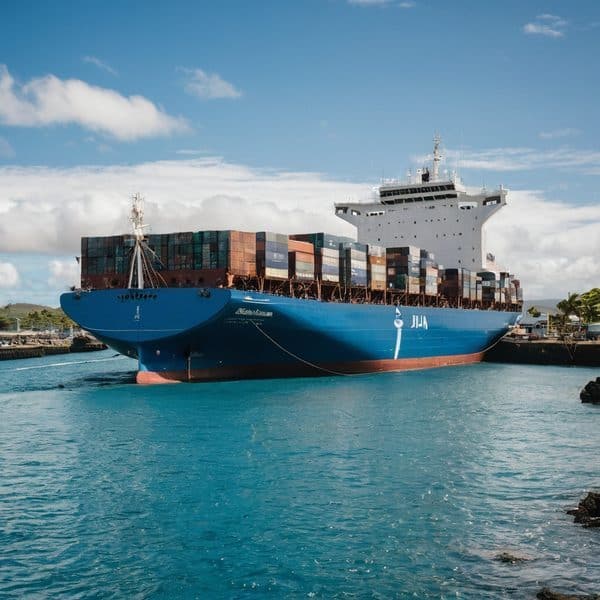
At the forefront is a renewed warning over the Pacific’s fragile shipping lifeline. Natasha Chan, assistant legal researcher at the Micronesian Centre for Sustainable Transport, told a regional forum that Pacific domestic shipping remains heavily dependent on imported fossil fuels and ageing vessels, leaving communities exposed to fuel shocks, isolation and empty store shelves. Chan said research shows fuel savings of at least 40 percent are achievable with the right technologies and financing and identified wind-assisted propulsion — modern sails and similar systems — as one of the most practical near-term options for the region. The push for low-carbon maritime solutions builds on momentum from institutions such as the International Maritime Organization’s new regional presence in Suva and Fiji’s transport reforms, but Chan warned that Pacific-specific research and scaled investment are still lacking.
In Suva, Fiji’s Climate Change Minister has set new priorities to accelerate regional climate action, according to the bulletin. While details were not fully outlined in the PACNEWS summary, the announcement comes as regional initiatives such as Weather Ready Pacific expand their work to strengthen early warning systems and safeguard vulnerable communities — a practical complement to maritime decarbonisation given the threats extreme weather poses to supply chains and lifelines.
Security concerns were also highlighted. Timor-Leste’s President José Ramos‑Horta warned that his country is vulnerable to “infiltration by foreign organised crime,” a blunt assessment that adds a law‑and‑order dimension to broader regional fragilities. The concern has implications for maritime border security and for how small island states defend against transnational criminal networks that can exploit long coastlines and limited enforcement capacity.
Several health and social developments were reported as immediate responses to crises. Gizo Hospital in the Solomon Islands declared a state of emergency, the bulletin said, though it did not provide further details on the cause or expected duration. In education, the University of the South Pacific moved to double student support in response to a global crisis, signalling intensified regional commitment to safeguarding tertiary access during turbulent times. Papua New Guinea’s Health Minister Kapavore publicly welcomed a visiting Chinese medical ship, praising the boost to health services that such deployments provide to remote communities.
The bulletin also noted items touching governance, public confidence and social welfare. Fiji’s Chief Justice criticised existing judicial retirement rules as “discriminatory,” raising questions about reform in the judiciary. In the private sector, PACNEWS flagged scrutiny around a politically connected cryptocurrency project reportedly pursued near a resort linked to figures accused of operating an alleged scam syndicate. Meanwhile, a commentator identified only as Anthony warned that a proposed fuel price increase would have a drastic impact on Fijian workers — a concern that echoes the shipping-sector warnings about fuel costs reverberating throughout island economies.
On a lighter but culturally resonant note, the PACNEWS digest highlighted how Dr Christina Koch’s journey from American Sāmoa to the Moon has been used to inspire Pacific youth, and confirmed that the World Council of Churches’ general secretary will attend an upcoming Pacific Church Leaders’ Meeting in Fiji — moves that reflect the region’s engagement across science, faith and community leadership.
Taken together, the items published in the 10 April bulletin sketch a Pacific region grappling simultaneously with climate-driven transport vulnerabilities, security threats, health service pressures and governance debates — and show policymakers and civil society seeking technical, financial and institutional responses in short order.
Leave a comment