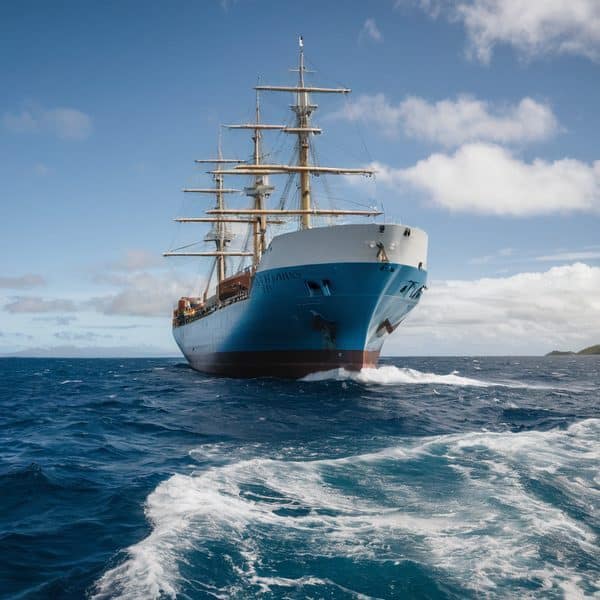
MAJURO — Pacific Island shipping networks face a growing crisis as experts at a regional discussion on low‑carbon maritime transport on 10 April warned that ageing vessels, soaring fuel costs and limited insurance and investment capacity are pushing island lifelines to the edge — and argued that wind‑assisted propulsion must be prioritised as the most practical near‑term solution.
Natasha Chan, assistant legal researcher at the Micronesian Centre for Sustainable Transport, told the forum that shipping is “our absolute lifeline” and stressed the region’s acute vulnerability. Pacific island nations cover millions of square miles with many routes stretching hundreds of miles between small, low‑income communities; any disruption can mean empty store shelves, fuel shortages and social isolation, Chan said. She noted the sector is trapped in a cycle of old or donated vessels, weak maintenance systems and undervalued crews that discourage investment and increase operating costs.
Chan highlighted research indicating that fuel savings of at least 40 percent “are available to us today with existing, mature technologies” if those technologies are adapted to Pacific conditions and backed by appropriate development and climate financing. Wind‑assisted propulsion — using modern sails or foil systems to reduce engine hours — emerged in the discussion as a ready option. Historical tests in the Pacific during the 1980s fuel crisis produced roughly 30 percent fuel savings; advocates say new materials and designs can improve performance for the small to medium vessels that dominate domestic Pacific routes.
Speakers warned that global innovations such as hydrogen ships being trialled in China, France and Norway are not necessarily suitable for the Pacific’s vessel sizes, trading patterns and logistical challenges. “It is not a case of simply taking international market leaders and scaling them down,” Chan said, calling for targeted research and development that addresses the unique operational profiles of Pacific domestic shipping.
Policy and financing gaps were identified as key barriers. Experts urged governments, regional organisations and donors to direct climate and development finance toward retrofitting and newbuild programmes tailored to Pacific fleets, to strengthen maintenance and crewing capacity, and to reform insurance markets that currently make operators reliant on end‑of‑life or donated ships. The point echoes recent regional efforts: Fiji hosts an International Maritime Organization regional presence office in Suva and has introduced measures such as mandatory pre‑entry shipwreck insurance and derelict vessel removal programmes to shore up maritime governance.
The push for wind‑assisted systems is framed as pragmatic and immediate: lower capital cost and faster deployment compared with nascent zero‑carbon fuels, and demonstrable fuel and emissions reductions using off‑the‑shelf technologies. Yet experts cautioned that realising those gains will require coordinated policy, technical assistance for shipowners and ports, and incentives to de‑risk early adopters.
The latest warnings come as Pacific governments grapple with multiple pressures — from climate impacts to volatile fuel markets — that make securing reliable, low‑cost domestic shipping a strategic priority. Proponents say the next step is a regional programme to pilot wind‑assisted retrofits on representative domestic vessels, accompanied by financing models that blend concessional loans, insurance support and performance‑based grants to prove viability and scale adoption across the Pacific.
Leave a comment