Pacific island nations face a string of fresh challenges and responses this week as experts warn that the region’s shipping lifeline is at crisis point, Timor-Leste’s president flags growing crime risks, and local health and climate systems move to shore up resilience.
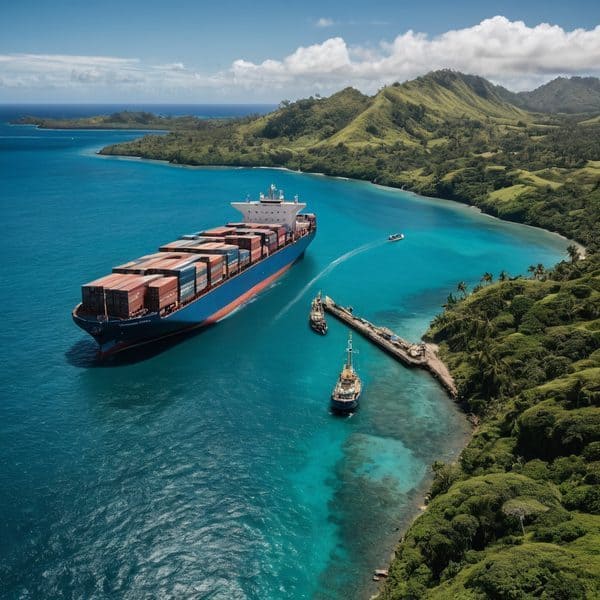
At the centre of the transport crisis is a renewed push to decarbonise domestic shipping by shifting to wind-assisted propulsion and other low-carbon technologies. Natasha Chan, an assistant legal researcher with the Micronesian Centre for Sustainable Transport, told regional discussions on maritime decarbonisation that Pacific fleets remain “heavily dependent on imported fossil fuels and aging vessels,” leaving communities exposed to rising fuel costs, supply disruptions and climate impacts. Chan said research indicates fuel savings of at least 40 percent are achievable with appropriate technologies and financing, and noted that modern wind-assisted systems — building on tests in the 1980s that showed about 30 percent savings — are among the most practical near-term options for the unique, small-vessel routes that service many outer islands. The warnings underline long-standing regional concerns about shipping connectivity, insurance and the prevalence of end-of-life or donated vessels, and follow recent moves such as the International Maritime Organization’s new regional office in Suva and Fiji’s push to tighten rules on derelict ships.
Security worries in Timor-Leste have also moved up the agenda. President José Ramos-Horta said his country is vulnerable to “infiltration by foreign organised crime,” a blunt assessment that spotlights the transnational threats facing smaller Pacific capitals and could prompt closer regional cooperation on policing and maritime border control. Ramos-Horta’s remarks add urgency to discussions about port security and law enforcement capacity across the region, which often struggle with long coastlines and limited resources.
On the health front, Gizo hospital in the Solomon Islands has declared a state of emergency, a development authorities say requires urgent attention to local capacity and supply lines. In Papua New Guinea, Health Minister Kapavore publicly commended a visiting Chinese medical ship for its services, reflecting continuing regional reliance on visiting medical missions to fill gaps in health outreach and specialist care.
Fiji and neighbouring countries reported a mix of governance and development updates. Fiji’s Climate Change Minister outlined new priorities to accelerate Pacific climate action, reinforcing the imperative to link maritime decarbonisation with national adaptation plans. Fiji’s Chief Justice has publicly described retirement rules as “discriminatory,” a judicial critique that could feed into ongoing public-sector reform debates. The World Council of Churches’ general secretary will attend the Pacific Church Leaders’ Meeting in Fiji, signalling engagement by faith networks on regional social and environmental issues. Meanwhile the University of the South Pacific has doubled student support amid a global crisis, an institutional move aimed at protecting education access for Pacific students during turbulent economic times.
Economic and political developments also figure in this week’s bulletin. Vanuatu Prime Minister Ishmael Kalsakau’s government launched Emua Vila, billed as the country’s first economic micro-hub, intended to boost local trade and connectivity. In Fiji, a public warning by a figure identified as Anthony cautioned that any fuel price increase would have a drastic impact on workers, echoing wider concerns about how global energy prices and maritime costs translate into hardship across the Pacific. Separately, reporting flagged that a politically connected cryptocurrency project is being pursued in connection with figures alleged to be part of a scam syndicate, an unfolding story with potential reputational and regulatory implications for the region’s nascent digital finance initiatives.
Finally, Weather Ready Pacific announced stepped-up efforts to strengthen early warning systems, an initiative meant to better safeguard vulnerable island communities from cyclones, coastal inundation and other climate-driven hazards. Taken together, these developments show the interconnected nature of maritime transport, security, health, economy and climate resilience across the Pacific — and why coordinated, locally scaled solutions are increasingly urgent as the region confronts overlapping crises.
Leave a comment