
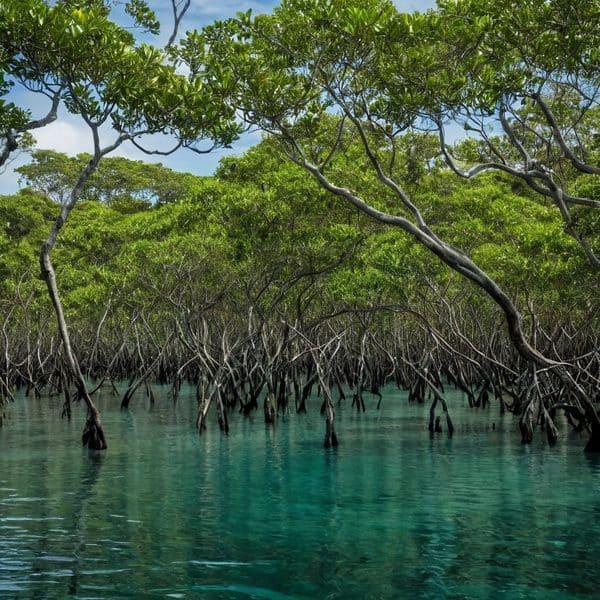
A seven-year stretch of stagnation in Navitilevu Bay has been reversed after targeted clearing of cyclone‑fallen deadwood and a combined programme of assisted natural regeneration and planting, Blue Carbon Project staff say. What was described as a “war zone” of tangled timber and blocked waterways is now a visibly green mangrove stand, with two‑year‑old plantings and dense natural shrubbery signalling a rapid ecological turnaround.
“Prior to intervention, surveys showed no natural regeneration of the mangrove species from 2016 to 2022,” said Sera Nagusuca, Blue Carbon Project Coordinator. Teams found that fallen trunks and branches left by a tropical cyclone had created physical barriers that prevented propagules — mangrove seedlings carried by tides — from reaching suitable soils. Clearing that deadwood, she said, was the turning point that allowed natural recovery to resume.
Clearing work was paired with community training and practical measures to speed recovery. Local residents received chainsaw training to remove obstructing timber safely and to reopen estuary channels and waterways so propagules could disperse into restored intertidal flats. At the same time, nursery‑raised seedlings were planted in cleared areas to complement and accelerate the assisted natural regeneration process, an approach Nagusuca said mirrors methods used in the Kiwa initiative’s Restore project.
A strict local‑provenance policy guided the replanting. Propagules were collected exclusively from within Navitilevu Bay so that replanted mangroves would match the genetic and ecological conditions of the site, avoiding crossbreeding with stock from other areas. “The selected species thrived in native soil conditions, showing strong survival and growth two years post‑planting,” Nagusuca reported, noting that nursery‑raised trees — including specimens identified in project notes as Bulgarian gibber species — are visibly flourishing.
The project's twofold methodology aims to increase early survival rates and overall ecosystem stability. Nagusuca said lessons from multiple Blue Carbon sites have been used to continuously refine field protocols, minimise risk to restored stands and improve replicability across projects. The team also emphasised quality assurance: maintaining a consistent propagation source, strict controls during site work and ongoing monitoring to ensure long‑term resilience.
Community involvement has been central to the programme’s success. Residents took part in chainsaw and nursery work, and local stewardship of the mangroves has increased as visible change became apparent. The transformation has been striking enough that long‑standing photo spots were moved after tree removal and regrowth altered the shoreline landscape.
Project leaders say the progress at Navitilevu Bay provides a tested model for similar coastal restoration efforts in Fiji: removing physical barriers set by extreme weather, restoring hydrological connectivity, using local propagules and combining natural and managed planting to rebuild functioning mangrove ecosystems. With two years of positive growth now recorded, the site offers a tangible example of how targeted intervention and community partnership can revive degraded coastal areas.