
The Republic of the Marshall Islands has been named co-chair of a new international coalition pushing to phase out fossil fuel incentives, the government and coalition partners announced this week — a development that comes as the Pacific atoll nation confronts an acute fuel-price shock that has prompted emergency measures. Marshall Islands Climate Envoy Tina Stege said the appointment to the Coalition on Phasing Out Fossil Fuel Incentives Including Subsidies (COFFIS) was announced during meetings in Santa Marta, Colombia, as member states gathered to discuss just-transition strategies.
COFFIS, a 17-country group launched at COP28 in Dubai, convened in Santa Marta during the First International Conference on the Just Transition Away from Fossil Fuels to compare approaches to cutting subsidies while protecting vulnerable households and small businesses. The Marshall Islands will co-chair the coalition alongside Dutch Climate and Green Growth Minister Stientje van Veldhoven, who said the move highlights a shared emphasis on “energy security, economic resilience, and a fair transition.”
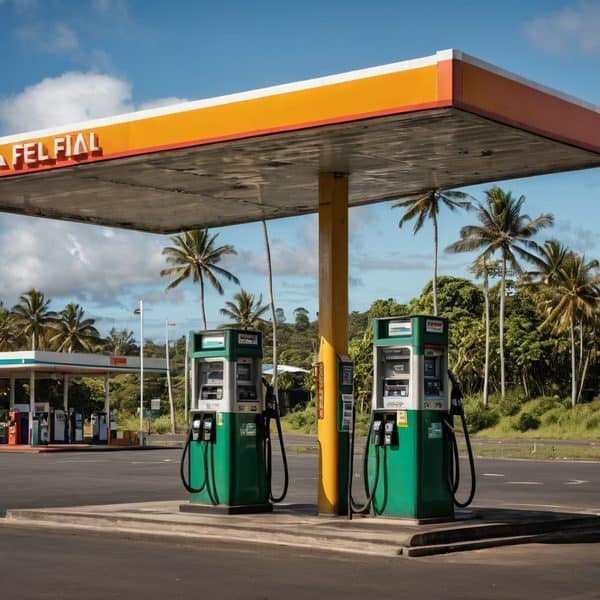
The Marshall Islands’ elevation to co-chair comes amid severe domestic pressure from global oil-market volatility. Stege revealed the government declared a 90-day state of economic emergency last month after pump prices surged to roughly US$8 a gallon, a spike that forced the state to introduce temporary relief measures. “Keeping the promises made in Dubai—to transition away from fossil fuels and the subsidies that prop them up—is not optional. It is a matter of survival for countries like ours,” Stege said, framing the coalition role as both pragmatic and existential for the low-lying nation.
COFFIS members cited recent tensions in the Gulf — including disruptions tied to the Strait of Hormuz, a critical chokepoint for oil shipments — as a driver of price volatility. The coalition noted Brent crude briefly topped US$100 a barrel, pushing up fuel, freight and electricity costs that feed directly into retail food prices and household bills in import-dependent island economies. These immediate economic shocks have sharpened interest among small island states in pursuing subsidy reforms that do not exacerbate hardship.
A central plank of COFFIS’s work is transparency and planning: the group is urging members to publish national subsidy inventories and adopt phase-out schedules as part of broader transition roadmaps. To date, eight COFFIS members have released such inventories, with more expected later this year. Coalition advocates argue that broad, universal fuel subsidies are expensive and inefficient, and that shifting to targeted support mechanisms can better shield low-income families while reducing dependence on imported diesel.
The Santa Marta discussions focused on practical policy measures — from how to design targeted cash transfers and tariff adjustments, to timelines for reducing fossil-fuel incentives alongside investments in clean energy and grid resilience. For the Marshall Islands, which faces rapid economic impacts from global price swings and limited domestic energy sources, co-chairing COFFIS offers a platform to push for international cooperation on financing, technical assistance and measures that link subsidy reform to social protection.
As COFFIS moves from launch-phase commitments made in Dubai to operational work, the Marshall Islands’ new leadership role signals the growing influence of small island states in global climate-policy forums and underscores how immediate energy-price shocks are reshaping priorities for both mitigation and adaptation.