
Prime Minister Sitiveni Rabuka has sought to calm immediate fears over fuel availability while warning Fijians to brace for further price pain, announcing this week a $56 million (US$39.95 million) government reprioritisation to ease the impact of surging global fuel costs. His statements on April 24 set out the latest supply picture, the government’s short-term response and why domestic prices — not physical shortages — are driving concern.
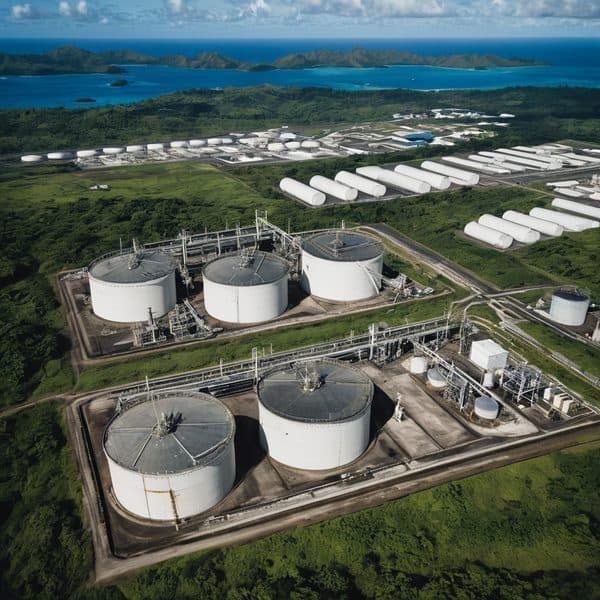
Rabuka said that as of April 19 Fiji held about 45 million litres of fuel onshore, with an additional 22 million litres due before the end of April, bringing April’s total available supply to roughly 67 million litres — close to half of the nation’s storage capacity. He noted daily consumption is running at about 2.5 million litres and said routine drawdowns are expected; stock levels are projected to fall to around 40 million litres, or about 29 percent of capacity, by month’s end to allow safe receipt and discharge of incoming shipments.
Looking ahead, Rabuka said fuel suppliers have committed to delivering about 118 million litres in May, which would lift national stocks back to more than 59 percent of storage capacity once those shipments arrive. “This means Fiji remains in a stable supply position. There is no shortage,” he said, describing the current situation as Phase 1 — a normal supply environment but one “under pressure from high global fuel prices.”
The government move announced on April 21 reallocates $56 million within the existing 2025–2026 Budget to provide immediate relief, Rabuka said, stressing this is not new borrowing but funds shifted from delayed projects. He framed the package as targeted to “protect livelihoods, maintain essential services, and support the most” affected households and businesses, though Cabinet has not yet published a detailed breakdown of specific measures or beneficiaries.
The prime minister emphasised the distinction between availability and affordability. He attributed the April 1 domestic price rise to decisions made by the independent price regulator, the Fijian Competition and Consumer Commission (FCCC), which adjusted retail rates to reflect higher global purchasing costs caused by the Middle East conflict and related disruptions, including temporary closures affecting the Strait of Hormuz. Rabuka warned another price increase is likely in May if international market pressures persist.
The update follows earlier government and regulator warnings in March about the risk of wider price shocks after tensions in the Middle East disrupted shipping and pushed up the Means of Platts Singapore (MOPS) benchmark that underpins refined fuel costs in the region. Fiji, which imports all its fuel, is particularly exposed to such swings because purchases are denominated in US dollars and influenced by global freight and exchange-rate movements.
For now, the administration’s message is that stock levels and planned shipments should prevent a physical shortage, but households and businesses should prepare for ongoing higher pump prices. The next critical developments will be the arrival and timely discharge of the committed May shipments and any further FCCC pricing reviews that reflect global market shifts.