
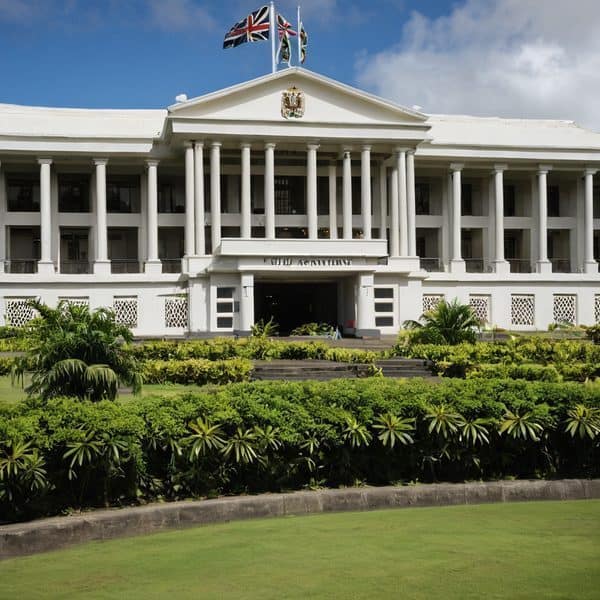
Parliament has approved a 20 percent reduction in the salaries of the Prime Minister, Cabinet Ministers, Assistant Ministers, the Leader of the Opposition and all Members of Parliament, in a move government members described as a demonstration of fiscal discipline and shared sacrifice amid continuing economic pressure.
Under the new structure the Prime Minister’s $320,000 salary will drop to $256,000, a cut of $64,000. Cabinet Ministers on $200,000 will see their pay fall to $160,000 (a $40,000 reduction), Assistant Ministers on $120,000 will move to $96,000 (down $24,000), the Leader of the Opposition on $200,000 will also be reduced to $160,000, and rank-and-file MPs earning $95,000 will receive $76,000 (a $19,000 decrease). Parliament approved the motion during debate on measures intended to rein in public spending.
Government MPs framed the decision as leadership by example. “This is about leading by example and ensuring that those in public office share in the burden faced by ordinary Fijians,” one MP said during the parliamentary debate, echoing ministers’ calls for accountability and prudent financial management. Supporters argued the pay cut sends a clear signal to the public that political leaders are willing to trim their own benefits as the government tightens expenditure elsewhere.
However, some opposition members raised questions about the measure’s fiscal heft. They argued that while symbolic, the salary reductions will not deliver major savings relative to the scale of government expenditure and public debt, and urged the executive to pursue broader measures to shore up the national accounts. Details of votes or any recorded dissent were not released in the immediate aftermath, but the motion passed, indicating crossbench agreement on the principle of accountability.
The cut comes against the backdrop of recent fiscal debates in Suva. The government’s 2024–25 national budget and subsequent briefings signalled ongoing pressures including a high debt-to-GDP ratio and constrained revenue growth. In late June, ministers outlined substantial allocations to health — including a $540 million package for the sector — while economists have warned that careful prioritisation of capital projects remains critical to sustain recovery and private-sector confidence.
Parliament did not immediately provide a timetable for implementation or the administrative steps needed to adjust pay schedules, and it is unclear whether the reduction will be applied retroactively to the current financial year. Observers say the measure’s immediate value may lie as much in restoring public confidence and political credibility as in its direct impact on government finances.
With the motion now approved, lawmakers say the pay cuts are part of a broader message about fiscal responsibility and shared sacrifice. Whether the symbolic gesture will be followed by larger-scale savings or structural reforms to strengthen Fiji’s fiscal position remains likely to become central to ongoing budget discussions in the months ahead.